
Who Will Give Orders?
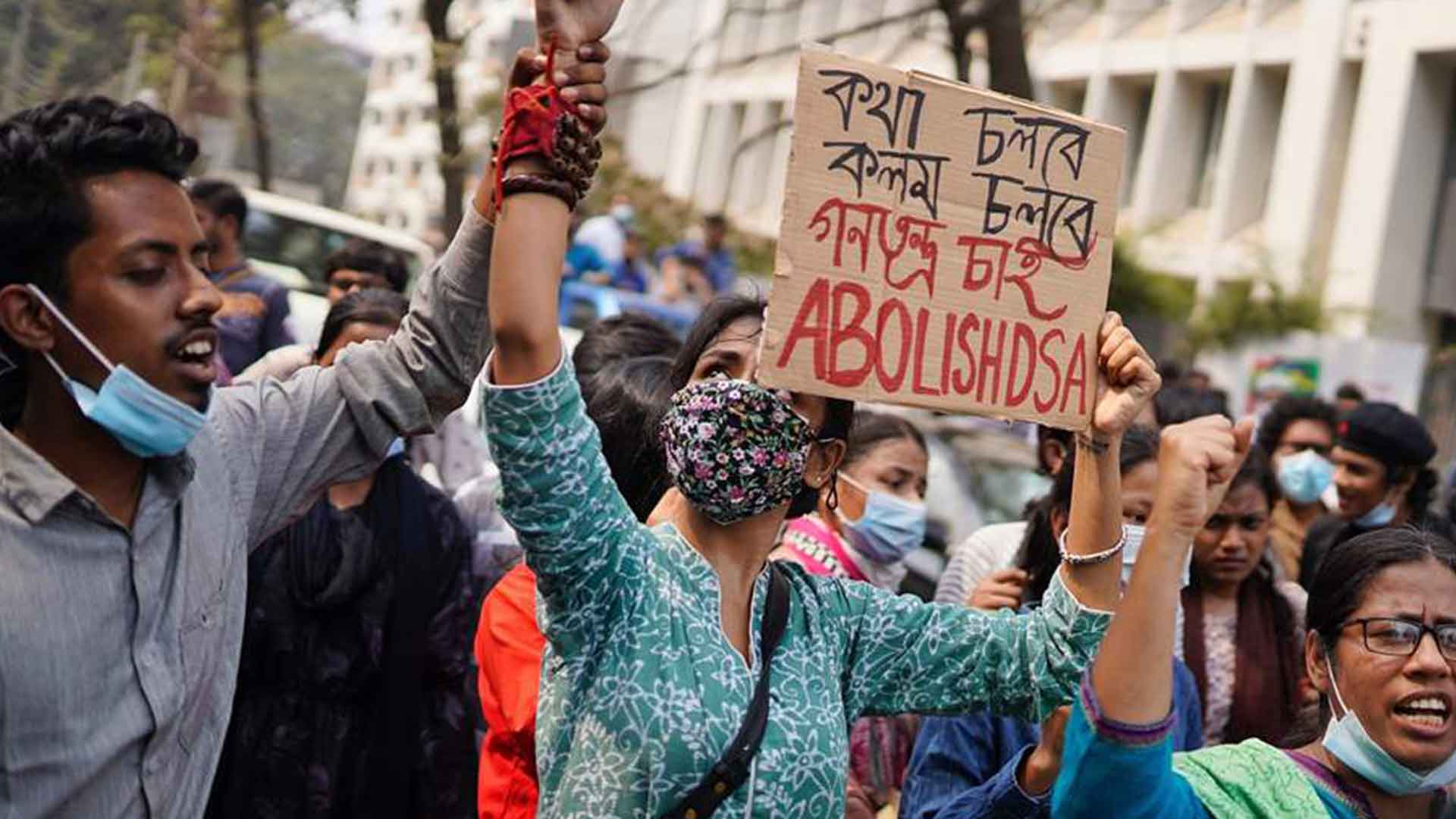
It has been a year since the July Uprising, which saw thousands of people on the streets what became one of the most dramatic acts of civil disobedience of the past decade.
Although the anger in the public has ultimately faded into the national memory, the chasm the incident revealed has never really closed or been bridged. Among them is a chilling question posed by Sara Hossain, a senior lawyer at the Supreme Court and one of the country’s most distinguished legal minds:
“With everyone in the phenomenon afraid to speak, who would have the courage to give the order?”
It’s a rhetorical question on its face, of course. But in truth it is a scathing commentary on the climate of fear and silence that seems to have overtaken chunks of Bangladesh’s judiciary and political machinery.
The Silence After the Storm
Public discussion has also taken a turn since July. Activists have gone quiet. Journalists tread carefully. Even judges who once made headlines for their courage from the bench are now playing it safe. Which is why Sara Hossain’s question feels so urgently shining against a bleaker backdrop.
She wasn’t speaking entirely in the abstract. They arrived partway through a panel discussion on judicial independence and human rights and such concerns have again been in question since this year’s post-uprising crackdowns. Arbitrary arrests, media censorship and delays to crucial cases have sparked alarm at home and abroad.
What Exactly Is the Question?
In order to appreciate the full impact of the question from Sara Hossain, it has to be placed in context. When a system is human and unfolds, the natural circle of command and the application of justice are paralyzed when fear supersedes duty. And if lower court judges worry about retribution, they may be reluctant to hand down fair verdicts.
If prosecutors are uncertain that their protections will shield them, they will shy away from controversial cases. And when senior justices can’t escape the politicization, the essence of rule of law starts to crumble.
In other words, the question is a warning: To repress is not only to induce fear it is to cause the entire system to malfunction.
Judicial Independence Under Pressure
The independence of the judiciary is enshrined in the Constitution of Bangladesh. But in reality, that independence has often been vulnerable to political interference, executive overreach, and public opinion. But the 17 months since July 2024 have put that fragility to the test like never before.
Since then, a number of high-profile cases have been delayed, and legal decisions that were once made in open court are now being postponed without explicit explanation. The word among the legal guild is that close to none want to challenge the state, and the state of play, redolent of political expectation, even feels itself watched.
A Broader Crisis of Confidence
Sara Hossain’s question also addresses a larger institutional problem: When fear squelches those inside a system, accountability disappears. And without accountability, injustice is institutionalized.
For the citizens who depend on the courts for protection, this is deeply disturbing. The courts are supposed to be the last port of call the end of the line when all other vehicles stall. But if those actors themselves are afraid to act, then where can the people go?
Is There a Way Forward?
It is not all bleaks. Though at significant risk, legal minds including Sara Hossain still continue to speak out. Civil society is still out there, just more guarded. There still is an opening albeit narrow for reflection, reform, and resilience.
One year on from the July uprising, maybe we are being prompted to face up to the quieter, more insidious afterlife: the fear that isn’t in the streets but in the courts and corridors of power. If we don’t pay attention to this, we risk betraying the very ideals that the uprising purported to represent.
And if all are frightened to speak, who will dare to lead?