
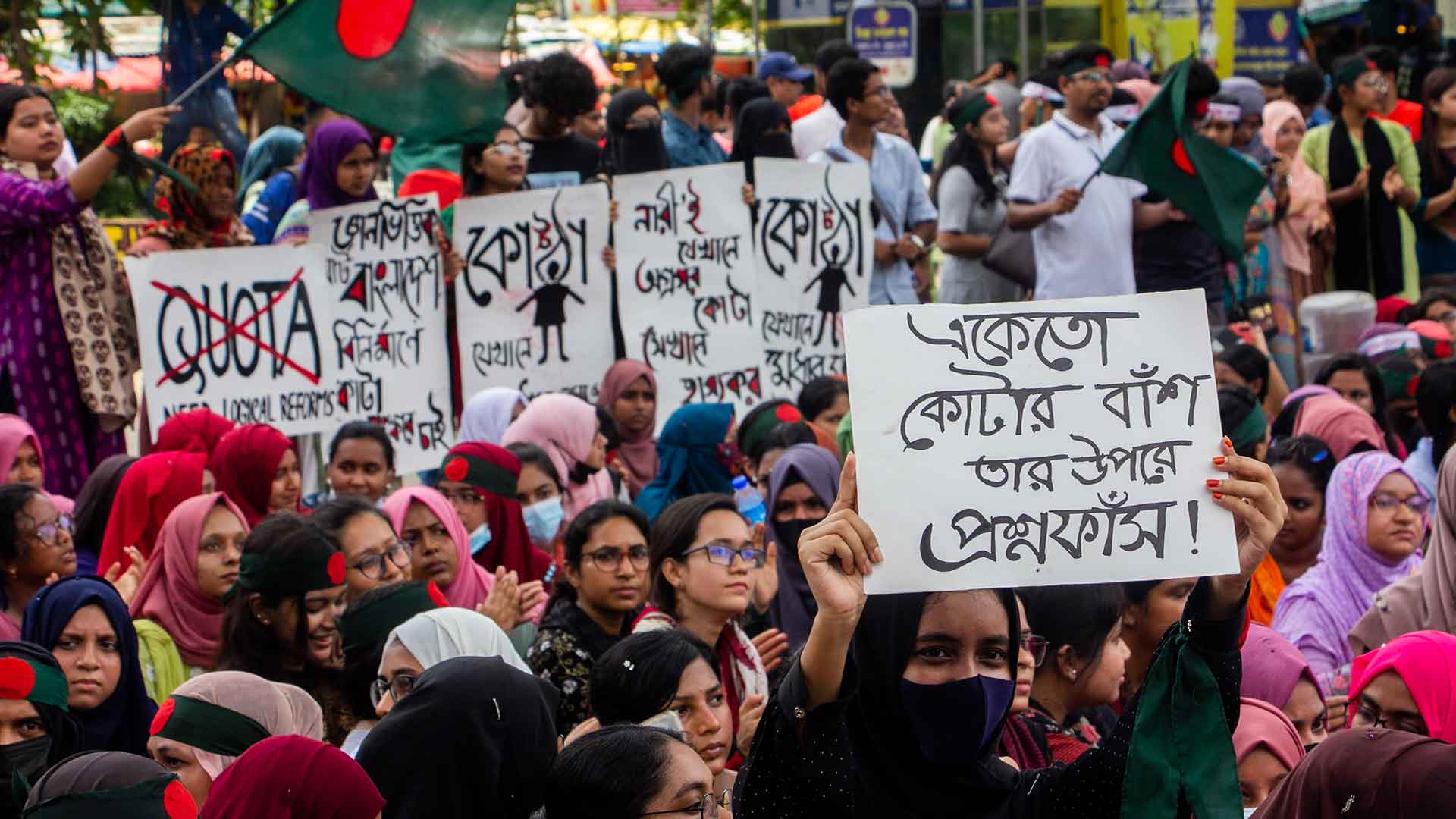
Youth power has long been a force in shaping the political and social contours of Bangladesh, and it is nothing new or unprecedented. From the Language Movement of 1952 to the Liberation War of 1971 and the Shahbagh protests of 2013, youthful voices have led the charge toward change. But today, something new is happening. A new book is being written—not only by a generation of youth but also by young women who are rising up as fearless leaders, strong organisers, and unwavering voices for justice.
We’ve witnessed a wave of activism in recent years that has pushed back on norms, roiled institutions, and demanded accountability. But what makes this wave different is not just its digital savviness or emotional pull it’s the face of the movement itself: a generation of young Bangladeshi women who are refusing to stay quiet.
Out of The Streets: Leadership from the Grassroots
From college campuses to countryside towns, young women are rising up to call for change. Whether protesting against gender-based violence, demanding education reforms, or mobilising for environmental justice, they are no longer peripheral to civil society—they are at its heart.
Consider, for instance, the Quota Reform Movement of 2018. The movement began as a series of demands for a fairer public recruitment system, but young women soon adopted visible roles, defying police crackdowns, media criticism, and society’s unwritten rules to lead the pack.
Or the Safe Roads Movement, in which pupils in uniform managed traffic with dignity and discipline reminding the nation of what responsible citizenship looks like.
These are not isolated events. They are signs of a wider trend: of young women rebelling against traditional female roles and rising into political leadership with a new clarity and conviction.
Social Media: The New Battlefield
Today’s movement is not confined to the streets it’s taking place online, too. Social media including Facebook, X (previously Twitter), and even Instagram has empowered techie young women in the area.
They are also leveraging these platforms to coordinate protests, tell stories, raise awareness about injustices, and build relationships with people across the country and beyond. Hashtags have become rallying cries. The world has seen harassment and brutality caught on video. PETITIONS Les petition en linger on constraint les institutions à regain.
In a culture were speaking out can be risky, digital activism has become a lifeline for many women. It’s a place where voices once muffled now resound, loudly and on a global scale.
Voices of a New Generation
The diversity of this generation of changemakers is particularly inspiring. Urban students, rural organisers, hijabi bloggers, and outspoken poets they are all pushing back and leading in their ways.
Activists like Moyukh Mishu, Shammi Akter, or unnamed youth-led collectives have reimagined what it means to be a political actor in Bangladesh today. They are intersectional, inclusive, and unafraid to challenge even the most powerful entities.
The War is Not Over, but Victory is Within Sight
And to be sure, the way is easier said than done. Female activists are still being harassed, threatened, and stigmatised by society. Many are written off as too emotional, too radical, or too young. But they persist. They push back. They are changing the political narrative and cultural perceptions of leadership.
As one such student protester put it recently, “We are not here to ask for permission. We’re here to take back what is already ours our voice, our rights, our future.”
A History in the Making
Leadership by young women in Bangladesh’s contemporary social and political movements is not an evolution it’s a revolution. They not only want justice they are making it. They’re not just fighting for change; they are the change.
They will be remembered not just for their courage but for their clarity of vision in a dark time. In classrooms and courtrooms, on sidewalks and Facebook posts, they are penning a new narrative one that begins with young women not as mere players in the movement for justice, but as its authors.