
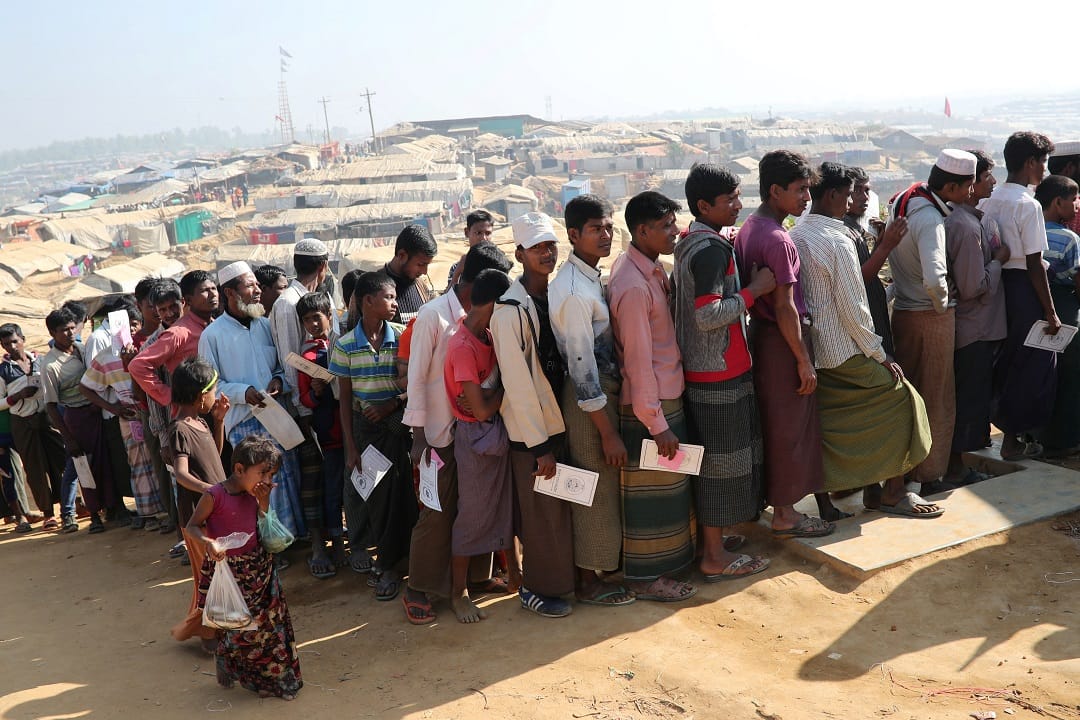
Cox’s Bazar, Bangladesh — A new report from the United Nations has affirmed that only increased humanitarian efforts can solve the Rohingya crisis. Watson. Instead, a political solution is critical for the safe and dignified return of Rohingya refugees to Myanmar.
Titled “Rohingya Perspectives on Pathways to a Safe, Dignified and Peaceful Future,” the report is based on interviews with 125 Rohingya people residing in the refugee camps of Cox’s Bazar. It was issued in advance of a United Nations General Assembly high-level event on the Rohingya crisis and other ethnic minority issues in Myanmar.
Voices from the Camps
Rohingya refugees interviewed for the report emphasised the importance of having educated Rohingya representatives work directly on any repatriation roadmap. They said their community’s future cannot be dictated without them having a say.
The Arakan Army (AA) was uppermost in everyone’s mind. More than 70 per cent of those polled said they feared the AA as hostile to Rohingya identity and that it aimed to “erase” the community. The return of refugees was feared because of possible forced labour, religious persecution, arbitrary arrests, and violent restrictions on movement. Women and girls were singled out as particularly at-risk groups.
Conditions for Safe Return
The report sets out the minimum demands of refugees for their return:
Full citizenship and acknowledgement of the Rohingya identity
Equal rights and freedom of transit
Access to education and healthcare
Protection of religious freedoms
Restoration of alienated lands and just compensation
Accountability for past atrocities
The creation of a UN peacekeeping or safe zone in Rakhine State’s Maungdaw, Buthidaung and Rathedaung townships
Though few Rohingyas wish to return as individuals — still traumatised by the memories of the mass expulsion in 2017 — they continue to see collective repatriation as necessary for their community’s survival and dignity.
Root Causes and International Role
Over 65 per cent of responses pointed to long-standing racism and religious bigotry as the catalyst. They outlined how the authorities in Myanmar deliberately created a climate of fear among Muslims to strip them of their rights and citizenship.
However, despite this backdrop, as the report demonstrates, there is a striking readiness among Rohingyas – particularly young people – to live and work peacefully alongside Rakhine Buddhists and contribute to the future prosperity of Myanmar if they are treated as ordinary citizens.
Refugees also urged the UN, regional powers, and Muslim countries to increase political influence over Myanmar. They said it is not the aid, but justice and legally binding agreements with international guarantees that are the key to securing eternal peace.
A Leadership Vacuum
Half of those interviewed mourned the absence of any leadership that could really be thought of as speaking out for them, the Rohingyas. More than 60 per cent of the women interviewed did not know, or were unsure, who represents them in their community. Both camp-based majhis and diaspora leaders were distrusted more generally, on grounds of corruption and self-interest.
However, the day-to-day reality in Cox’s Bazar remains grim: food shortages, inadequate healthcare, limited education, and insecurity. Rohingya youth, in particular, view education and livelihood prospects as key to reclaiming their dignity and nurturing the next generation of leaders.
UN Recommendations
RECOMMENDATIONS At the end of its report, the OHCHR makes recommendations in several areas to:
Very closely watch the outrages of the Arakan Army
Acknowledge the persecution of the Rohingya as only one aspect of Myanmar’s broader pro-democracy struggle.
Invest in Rohingya youth and civil society leaders.
Expand access to higher education.
Reparations and land restitution must be entrenched in any repatriation package.
Outlook
However, amid intense fears and insecurity, though most refugees’ message is loud, they want to go home – but only in safety, dignity and with justice. However, for that to happen, the UN insists, international players must go beyond delivering aid and conventional narratives to address a political situation that is still preventing any lasting solution.