
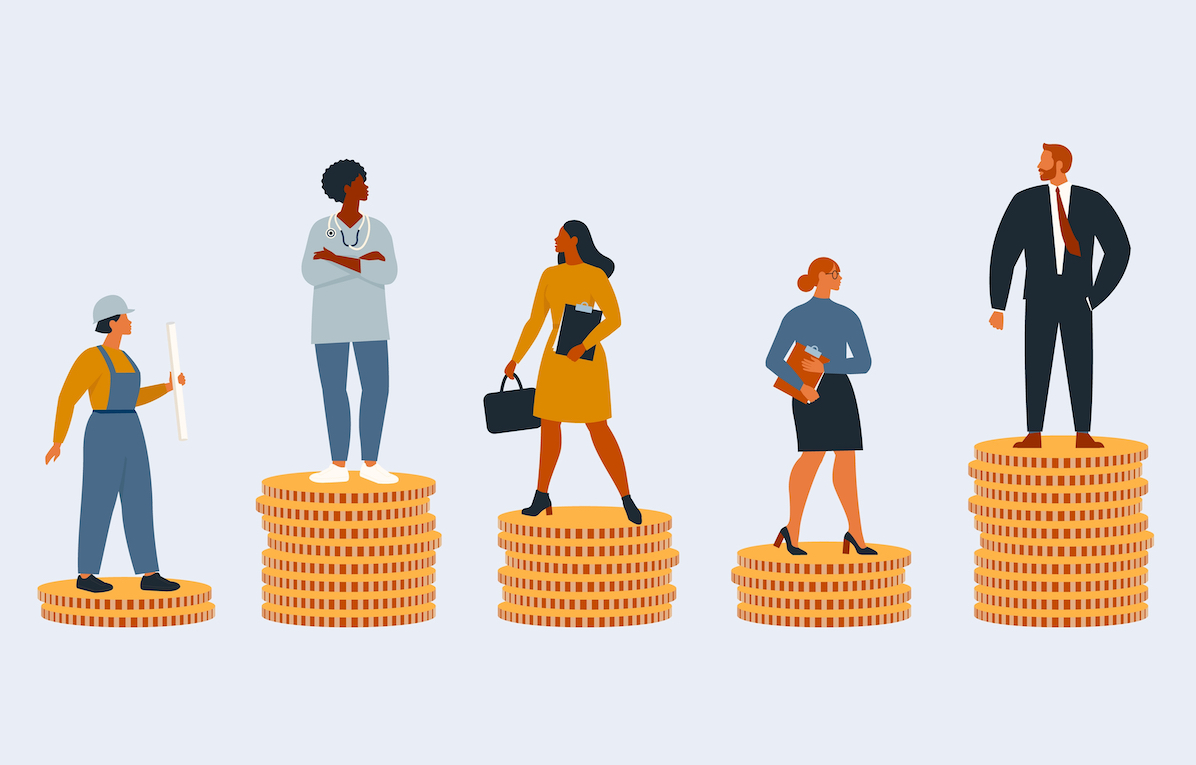
Income Inequality in Bangladesh
Bangladesh is frequently lauded as a “development success story.” In little half a century, Bangladesh has gone from a war-torn, famine struck country, to one of the fastest growing economies in South Asia. The garment industry alone, its ready-made-garment seamstresses, its overseas remittances, its army of small entrepreneurs, has lifted millions out of poverty. But lurking beneath the celebratory headlines is a disturbing truth: The fruits of growth have not been equally distributed. Income inequality in Bangladesh is growing and is undermining the very social foundation that has facilitated its elevation as a nation.
The Numbers Behind the Divide
The Gini coefficient (a measure of inequality commonly used where zero equals perfect equality, and one indicates complete inequality) has been increasing consistently in Bangladesh. The national Gini increased from 0.458 in 2010 to 0.499 in 2022, according to the Bangladesh Bureau of Statistics (BBS). This makes Bangladesh, in terms of inequality, one of the most unequal countries in Asia.
“The contrast between rural and urban households is pretty dramatic. Cities like Dhaka and Chattogram are home to better employment, health and education possibilities compared to rural areas, where families frequently cope with underemployment, landlessness and fluctuating agricultural incomes. In 2022, the richest 10 per cent of Bangladeshi society accounted for more than 40 per cent of total income: the poorest 10 per cent, more than 1 per cent.
Growth Without Equity
One of the paradoxes of Bangladesh is that remarkable GDP growth has not begot parallel social mobility. The garment industry, which provides employment to over four million workers (mostly female), has pulled many households above the poverty line, yet wages are low and workers’ rights protections weak. At the same time, such urban elites have been gaining vastly from the burgeoning real estate, banking, and ICT industries.
Remittances another pillar of Bangladesh’s economy are also patchy. Families with relatives working in the Middle East or Malaysia often rise into the middle class, while those without opportunities to migrate are left out.
Structural Causes of Inequality
Many reasons have been cited for the growing gap:
Disparities in Education – Quality education is still out of reach for the rural children, with the children in cities thrive on them. Most of those are private colleges and English-medium schools that serve the wealthy, perpetuating privilege through multiple generations.
Healthcare Disparity – Out-of-pocket health expenditure is one of the highest in Asia. A medical crisis, for low-income families, usually means sinking further into poverty.
Land and Housing– Land ownership is extremely unequal. Landless in the countryside are on the rise with spiralling costs of housing in urban areas rendering it impossible for low- and middle-income families to afford decent housing.
Low Taxation and Redistribution – The revenue to GDP ratio in Bangladesh (tax and GVH-NREG) is among the lowest in the world. And without appropriate taxation and social support, wealth accumulates on top.
Social and Political Implications
The costs of untrammelled inequality are more than economic. Gaps are growing, and that is damaging social cohesion and creating frustration among young Chinese. Urban slums are filling up with internal migrants, where poor housing, insecure employment, and the absence of public services form hotbeds of unrest. At the same time, wealth is concentrated, the elite have outsized sway over politics, governing priorities, and media paradigms.
Pathways Toward a Fairer Future
- Tackling income disparity in Bangladesh Calls for drastic reforms:
- Progressive Tax: Broaden the tax base & make wealthy pay.
- Education for All: Invest in rural schools, vocational training, and digital literacy.
- HealthCare Access: Ensuring public hospitals are vibrant and cutting out-of-pocket costs.
- Social Protection: Scaling up cash transfers and old age pensions for vulnerable populations.
- Worker empowerment: enforcing labour rights for fair pay and unionization.
Conclusion
Bangladesh has shown that u can in fact grow amazingly fast despite difficult circumstances. But GDP is not the only measure of sustainable development. Real progress will depend on whether the country can make prosperity percolate not only to its villages as well as its cities, its women as well as its men, its poor as well as its rich. What we need now is not simply to grow but to grow together.
Do you want me to write a heavy data and research-based article, supported by various sources like World Bank, UNDP, BBS reports, or just curious about it based on a human-interest style article, real life stories (an example of a factory worker in Dhaka, a farmer in Rangpur)?