
Causes, Consequences, and the Road Ahead
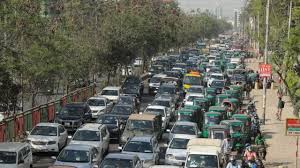
Traffic Congestion. It hampers productive energy and fails to foster a cheerful disposition. Traffic bottlenecks are not a result of an excess of vehicles. On the contrary, they represent a design challenge related to the management, governance, and development of the city.
This article looks at the factors behind the traffic mess in Dhaka, the social and economic costs it levies upon life there, and how to take it forward.
The Roots of Gridlock
Transport Empowerment
All travel in Dhaka relies on roads, with rickshaws, CNGs, cars, microbuses, and motorcycles competing for limited space. Because its mass transit system structure was inefficient (only in the last two or three years have stations been built at convenient points), it had no alternate method for every commuter. Congestion was simply unavoidable.
The city’s traffic plan has long been based on an idea of hydrocarbons rather than passengers. Roads have been expanded, rather than transit transport capacity being enhanced.
Unplanned Urban Expansion
Dhaka’s growth has been both haphazard and centralised. The neighbourhoods of Motijheel, Farmgate, Gulshan, and Agargaon are home to job centres, schools, universities, and hospitals. And affordable housing is nowhere to be seen, so that millions end up commuting for hours on end each day.
As a result, the peak periods of traffic are regularly north-south in the morning and south-north at night, but key corridors and intersections get blocked as a result. This is not only a transport issue; it’s a land use problem: residence, business, and services do not coincide.
The Breakdown of the Bus System
Dhaka’s public buses should be the mainstay of its transport system. Instead, they are the cause of frequent disorder. Dozens of small private operators are competing on the road for customers, resulting in wild driving, unscheduled halts, and lanes that are thoroughly blocked.
Middle-class commuters are moving to private cars or ride-sharing apps as irregular and poor regulation in public transport gets worse, adding to the already heavy congestion on our streets. As public transport deteriorates, traffic jams intensify even more; the cycle is vicious.
Encroachment and Illegal Parking
Packed cars, roadside vendors, and semi-permanent stands occupy much of Dhaka’s road space. A four-lane road turns easily into a two-lane one. This is not only a transport issue; it’s a land use problem: residence, business, and services do not coincide. aren’t caused by there “being too many cars.” Quite the opposite, they are a design issue connected to how the city is managed and governed and how it’s grown.
This article looks at the factors behind the traffic mess in Dhaka, the social and economic costs it levies upon life there, and how to take it forward.
Deficient Traffic Management
Even where there are junctions for managing traffic, these fail. Signals are in bad synchronisation or simply ignored; ditches and overland flows (as well as dangerous left turns) happen frequently. Occasionally the police exercise direct traffic control even contrary to automated systems, and the result is chaos.
Traffic discipline is not just about rules; it’s about knowing what can be anticipated. Dhaka fails on both counts.
Construction that Never Ends
Uncoordinated construction projects, from sewage renovations to road intersection openings, constantly upset traffic flow. Various agencies repeatedly excavate streets without proper coordination. Ineffective protection for sites still under repair and debris remaining after work is completed reduces road capacity for months.
So, parts of Dhaka today are permanent construction zones.
The Human and Social Costs
Lost Time, Lost Lives
The average Dhaka commuter currently spends several hours each day stuck in gridlock, sucking both precious time for oneself and quality of life away. Parents get fewer hours with their children, as commuting to go to school can be longer than the time spent in class itself.
This is a boon for would-be criminals and oppressors alike – women out after dark or occupying crowded buses are exposed to that much more harassment. It means their freedom of movement is still more curtailed.
Talent is leaving the city, and foreign investors are looking elsewhere. Countries are competing for the same pool of highly skilled professionals in every city. Traffic congestion impedes development. Killings as a Result of Road Traffic. Navigation systems have shown that once control is lost on ordinary roads, there is little chance of recovering from the resulting chain reaction and its consequences. During a police workshop organised by the Ministry of Public Security, we ought to learn about the problem of accidents and see life in a fresh light.
Professionals find daily traffic jams intolerable. Whether it’s good people or money, Dhaka is a big obstacle obstructing their lives and work. In a city where people cannot move, there will be a flight from people themselves.
A way to move forward.
Reform and rationalise the bus system. An orderly bus network with routes and services coordinated between different operators and fixed stations can revolutionise transportation overnight. Reliability of buses will encourage even middle-class travellers to transition from cars to buses. This single act of reform will release quite a lot of road space and reduce confusion.
Develop big-capacity transit. The new metro lines are an encouraging start. But success hinges on feeder buses, pedestrian access, and safe passage to and from the stations. Without seamless integration with people’s homes and workplaces, metro systems lack value.
Enforce Parking Rules and Open the Roads. Strict enforcement against illegal parking and the external occupation of roads is essential. Designated loading bays, points for picking up children at school, and parking for limited periods can all help maintain order. Clearing lanes will immediately boost efficiency without any new infrastructure.
Upgrade Links and Signals. Most of the congestion occurs at crossings. Rebuilding U-turns, synchronising signals, and installing barriers against cross traffic at right angles can all significantly improve the situation. These are low-cost but high-impact measures.
Implement staggered hours for work and school. The HMG offices, private enterprises, and schools are all starting within the same space of two hours, and this is jamming the roads. Adjusting the starting hours can reduce traffic peaks and decrease the daily surge without incurring significant costs.
Decongesting Dhaka Relief in the long-term means shifting some of the burden away from Dhaka itself. Encouraging industries, universities, and key government functions to expand in other cities will naturally reduce travel demand. True reform should be about making other cities viable, not just making Dhaka wide.
People walking and biking are the first priorities.
Within three kilometres, close to half of Dhaka’s urban population travels. These trips are a neighbourhood or two apart and easy to walk or bicycle. All they require is some public safety walking space and basic accommodations for cyclists. Therefore, walking does not offer any improvements for short motor journeys. This could significantly help cut down on these trip types, though not all of them.
Conclusion
Dhaka’s traffic nightmare is not really such a mystery. It is the inevitable result of decades of disjointed urban growth, car-centric planning, and slack enforcement. The social and economic costs are already huge: lost productivity, public health dangers, and widening inequality.
But policy, not concrete, is where the promise lies. Cities as far apart as Jakarta and Bogotá revolutionised their transportation systems by exercising tight control over traffic, providing reliable public transport, and spreading development across a wider area. Dhaka can achieve similar improvements if it starts to view transportation to serve its citizens, focusing on economic development rather than merely addressing law enforcement issues.
Only when the metropolis can in this way move unimpeded, fairly, and finally forward toward a more liveable future, can it do so.