
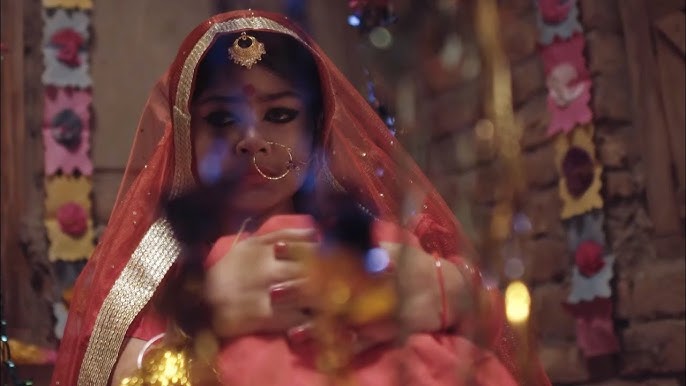
A National Crisis Demanding Urgent Action
No matter what, Bangladesh’s development so far has been impressive, including in areas such as poverty reduction, education, and women’s rights. But one harsh fact persists across the length and breadth of its social landscape: child marriage. Despite laws, public awareness campaigns, and social gains, Bangladesh still stands third in the world for the highest rate of child marriage, with only Nigeria and the Central African Republic ahead of us.
According to UNICEF, half of Bangladeshi women are married before they turn 18. One in six girls weds before reaching her 15th birthday; these numbers aren’t just figures but represent millions of failed childhoods, stunted educations, and shattered hopes for the future.
As a Tradition Rooted in Fear and Inequality
In many rural areas, parents believe that the early marriage of their daughter will protect her against poverty, harassment, and “dishonour”. They think that marriage provides safety and stability in a world full of uncertainty and turmoil, where families have to scrape just to make ends meet. Early marriage can significantly reduce the financial burden on already struggling families.
But beneath this reasoning lies a deep-seated inequity. Girls are still considered a burden – instead of an asset; they are treated as dependent children who cannot make their own decisions. In some cases, parents feel pressured by fear of social stigma and harassment to marry off their daughters long before the girls are emotionally or physically ready for love marriages of their own.
These are choices that come from affection and fear, but they have lasting and tragic consequences—perhaps even through a lifetime.
The Legal Loophole Which Keeps the Door Open
The Child Marriage Restraint Act (2017) of Bangladesh made 18 the minimum age of marriage for girls and 21 for boys. However, the law’s “special provision”, which there is an opportunity to take advantage of if one should qualify under “exceptional circumstances” and with parental and judicial consent, allows marriage under 18 years old.
This vague clause is often used by families, elders and even some government officials as an excuse for child marriage when poverty or social pressure comes into play. Instead of serving as a deterrent, the law has become an open door that’s easily left ajar. If Bangladesh is serious about stopping child marriages, then this loophole needs to be removed. No ‘special case’ should bring a child lifelong suffering through forced marriage. Early marriage has a high price. Child marriage is not just a personal tragedy – it is a national disaster. Girls who marry early are more likely to drop out of school, suffer ill health and remain poor. Early pregnancy often results in death-dealing complications like obstetric fistula and maternal mortality. The World Bank estimates that ending child marriage will bring Bangladesh billions of dollars in additional income and productivity over time. Simply put, if girls go to school and enter the labour market rather than the marriage market, the whole country profits. Education: The Best Weapon. Education still is the most effective way to delay marriage. Programs like the Female Secondary School Stipend Project have made progress in this regard, providing monetary incentives to families that keep their daughters in school. However, further efforts are required. Rural schools must have better physical conditions, more hygienic surroundings and access to sanitary facilities for menstruating girls so that they can attend regularly. Aside from this, technical and vocational training should be expanded, giving young women the real opportunity to refuse early marriage. When girls see life beyond the household, and parents sense both economic and social value in having educated daughters, this cycle of misery can end. Changing Mindsets: A Social Revolution in the Making. Laws alone will not rid one of hundreds of years of inherited cultural tradition. To end child marriage, Bangladesh needs a change in public attitudes.
Engagement with local religious and community leaders who frequently wield more influence than politicians or activists is also necessary for advocacy.
People pay attention when imams and village elders, teachers and celebrities, and sports stars raise their voices against marriage.
The Media Should Be Taking Responsibility
We should not accept the idea that mass media are independent and impartial observers of society. To take advantage of this
But even more promising are developments concerning the application of technology. The idea of an expanded digital birth registration system, for example, will make it harder to produce counterfeit age documents when registering a marriage. By enforcing these systems strictly and making those who help in arranging an underage marriage face fines and other penalties, a real disincentive to such behaviour could be created.
Technology is not enough by itself – we need people to be responsible. Proper training and supervision have to be given to local government officials, registrars and law enforcement in order to ensure that they adhere to the law fairly and impartially.
The country as a whole needs a national moral awakening, not just government policy, to end child marriage. Working in tandem, poverty alleviation, social welfare, and education policy must uphold the best practices.
If Bangladesh can build bridges and highways, if it can set up a digital infrastructure for the nation, why can it not also fashion a future in which every girl is given the right to reach adulthood before being married?
It is not just about girls. Child marriage robs a country of its future: each young marriage is also the potential loss of another doctor, teacher, businessman or statesman.
Bangladesh’s aspiration to become a developed country by 2041 depends on how well it treats its girls. So, we must make sure that no girl’s life is ever curtailed by an unwanted marriage before she is old enough to determine her future.