
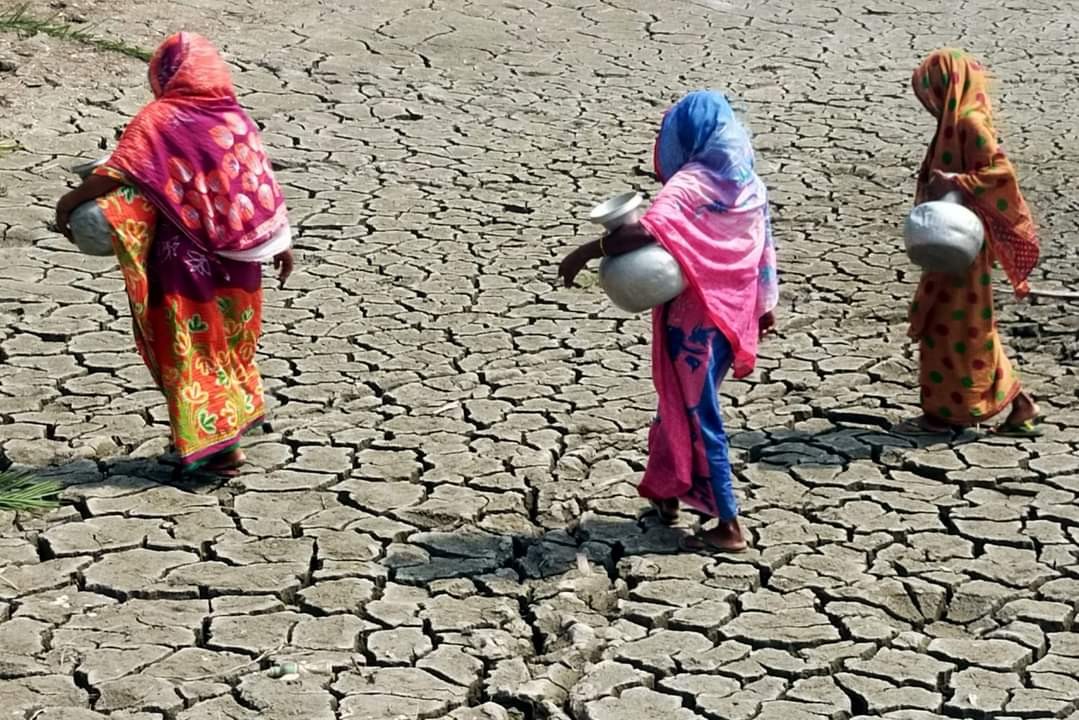
Bangladesh has been called “ground zero” for the climate crisis. Painfully true though it is, it is by now almost cliché. Because of its deltaic geographical, high population density and heavy dependence on agriculture, Bangladesh is one of the most climate-vulnerable countries in the world. The big sea level rises, more intense cyclones, unreliable rainfall, and longer dry spells are not distant threats, they are already the lived experience of millions.
A Geography at Risk
Over two-thirds of Bangladesh is less than five metres above sea level. This leaves the country uniquely vulnerable to rising seas caused by global warming. A 1-metre sea-level rise this century, as estimated by the Intergovernmental Panel on Climate Change (IPCC), might send more than 30 million Bangladeshis packing for drier settlements. Seawater intrusion is already poisoning fields and drinking water sources for people in Khulna, Satkhira and Barguna, the coastal residents, who now find their once-fertile fields ravaged saline lands.
Cyclones Growing Fiercer
Cyclones are nothing new to the Bay of Bengal, but climate change is making them more deadly and more frequent. The devastation caused by storms such as the Cyclones of Sidr (2007), Aila (2009), Amphan (2020), and now Remal (2024) cannot be forgotten. These storms not only ruin homes and take lives, but they also devastate lives. Saltwater flooding destroys rice paddies, ruins shrimp farms and leaves fishing communities without boats. And for families who are already one misstep from falling into poverty, each cyclone is more than just a disaster — it’s a step back that makes recovery more complicated.
The Rural Exodus
Bangladesh’s demographics are increasingly defined by the climate crisis. Every year, thousands of families leave the vulnerable countryside for urban areas, including Dhaka and Chattogram. Labelled “climate refugees,” they become part of the growing urban poor, living in slums with few facilities for sanitation, education, and healthcare. Dhaka itself sucks in more than 400,000 new migrants each year, many the product of climate-induced displacement. What happens when the city can’t itself handle the weight of this human tide?
Women and Children: The Secret Victims
Not everyone is equally vulnerable to climate change. It is women and children who are largely affected, both physically and (for women) socially. Saltier ponds are forcing women to walk farther to fetch drinking water in coastal villages. Families often cannot afford to keep girls in school, and will pull them out to work at home, or marry them off when young. Children experience malnutrition, trauma, and loss of schooling in the wake of disasters. And so, the climate crisis in Bangladesh is not merely an environmental issue but a human rights issue too.
Local Resilience, Global Responsibility
But Bangladesh is not a victim alone. The country has become a world leader in climate adaptation. Cyclone preparedness programmes, early warning systems and cyclone shelters at a community level have significantly lowered deaths from cyclones compared to the past decades. Farmers are trying out strains of salt-resistant rice, floating gardens, and rainwater-harvesting systems. Local and grass-roots NGOs and community groups play a critical role in developing resilience at the local level.
But adaptation has its limits. In other words, no level of resilience can ever be enough to inoculate Bangladesh from a crisis it did not create. The irony is glaring Bangladesh accounts for less than 0.5% of the planet’s carbon emissions, but it is among the hardest hit. The onus falls on industrialised nations – they must significantly reduce emissions and deliver on their climate finance commitments to vulnerable nations.
A Call for Climate Justice
While the world discusses climate policy in international conventions, the people in Bangladesh face the fallout every day. Their situation is not a cautionary tale but a reflection of what many other places will face if serious action is not taken now. The climate crisis isn’t coming; it’s here, and in Bangladesh it is tearing coastlines apart, remaking lives and testing government policies and international aid to a far greater extent than other countries.
The story of Bangladesh is one of survival, but survival cannot be its only option. Only global solidarity, rapid reduction of greenhouse gas emissions and fair financial assistance for adaptation and loss-and-damage recovery will make a difference. Anything less would be a betrayal of those who are enduring the most of a crisis not of their making.
There is no time to lose, and the tide is already rising for Bangladesh.