
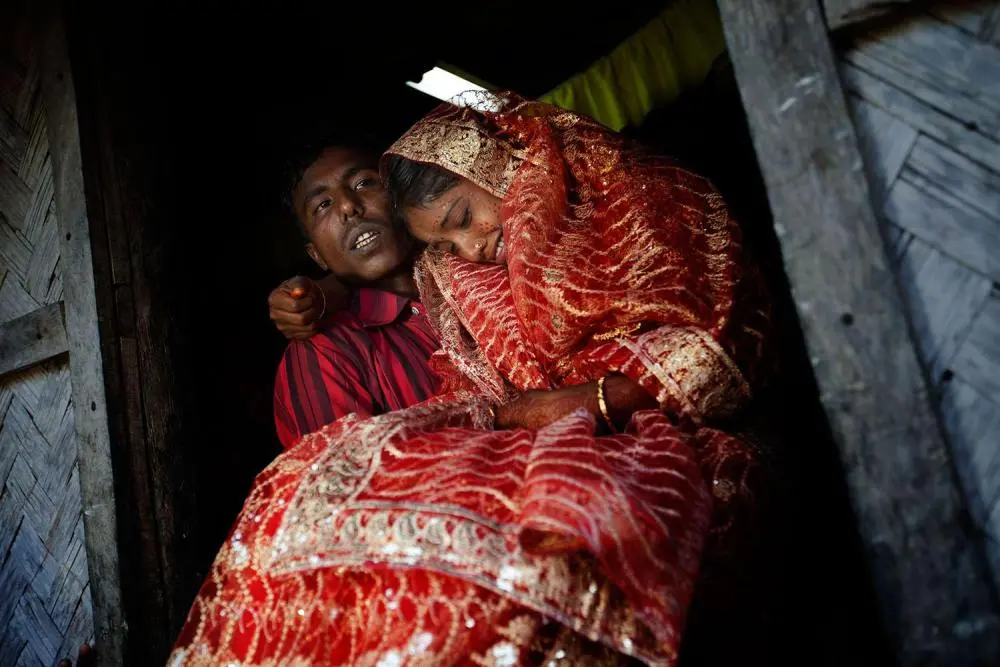
Why ending child marriage requires more than awareness
Unfortunately, in this day and age of advocacy, editorial columns, awareness campaigns, and improved laws…child marriage still does happen too often in our world. What was supposed to be a dying practice lives on unchecked, revealing an inexcusable disconnect between policy and reality.
A recent report on child marriage offers a disturbing portrait. Despite great strides in girls’ education, the number of young girls who are married off when they are still children has increased. Reasons for this may range from economic stress, community pressure, or even the misguided notion that marriage guarantees safety, but the result is predictably tragic. Our girls are having their childhoods taken from them, as well as their health and, in too many cases, their future.
The newest research makes one thing painfully clear: slogans and moral appeals are insufficient. In many rural areas, there is also widespread support for early marriage as a safety net, a way out of financial hardship or an attempt to preserve the honour of a girl. Families frequently are unaware of the devastating long-term physical and emotional damage that results from early marriage and early gestation as they make these choices.
Early motherhood, in particular, is still far too prevalent. Young brides themselves are still children, becoming mothers many years before their bodies and minds are ready. The repercussions extend far beyond an individual’s condition, affecting family stability, community growth, and national development.
This fact reveals the shortcomings of existing prevention work. Occasional warnings to households or erratic policing cannot break the back of a tradition that has both cultural and economic roots.
The work to end child marriage is not only transformative, but this global commitment requires a coordinated, long-term, and comprehensive approach that treats it as the public health and development crisis that it really is. Healthcare, education, and legal systems should collaborate to create a safety net that recognises, protects, and supports high-risk (at-risk) adolescents.
Community awareness must also evolve. Discouraging early marriage is not enough; communities need to recognise the long-term health effects of early pregnancy and the enormous loss to their potential when girls are denied a chance. At the same time, we must empower young girls with concrete alternatives: sustained education, vocations, and safe community spaces in which to grow, learn, and dream, free from literal harassment.
Child marriage is more than a cultural practice; it is an institutional failure. To ensure a better future for our children, our response must go beyond words and strike at the social and structural ground on which this abusive tradition still firmly rests. And only then can we start to disrupt the cycle and ensure that every girl has an opportunity to thrive.