
What the new MICS Survey reveals about our children, mothers, and future
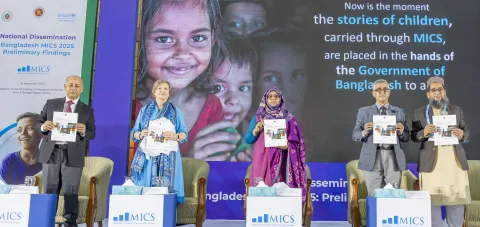
The newly published Multiple Indicator Cluster Survey (MICS) 2025, a collaboration between the Bangladesh Bureau of Statistics (BBS) and UNICEF, offers an extensive – and often sobering – view into the situation of child rights, maternal health, and social well-being in Bangladesh. This National Nutrition Survey was launched at the China-Bangladesh Friendship Conference Centre in Dhaka and is based on a dataset containing 63,000 households; it portrays both inspiring progress and serious challenges.
Child Marriage: A Persistent Crisis
One of the most shocking findings is that one in two girls in Bangladesh is still a child bride. That figure is down slightly from 60% in 2019, but the larger picture is bleak. Some 47% of women aged 20–24 were married before age 18, compared with 51% in 2019.
“There are measurable achievements, but they are simply taking too long,” said Rana Flowers, UNICEF Representative. If the pace of change continues as it is, Bangladesh would take a minimum of 64 years to end child marriage.
The economic toll is also immense – Tanzania suffers an estimated 7-8 billion USD in lost productivity per year due to child marriage.
Maternal Health: More Births Happen in Hospitals, but More C-Sections Too
Anecdotal reports suggest an increase in institutional deliveries, the survey reveals. Births in hospitals and health centres have increased by 18% and now account for “N̲0̲w̲71%” of deliveries.
But this positive aspect has a dark side: Caesarean sections have shot up, increasing 16% since 2019 to just under 52% of all births, well above WHO guidelines. At the time, experts at the event demanded closer monitoring and regulations to stop unnecessary surgeries.
Child Mortality: A Bright Spot
Except for black survival indicators, results in child survival suggest moderately superior performance. Under-5 mortality has dropped to 33 deaths per 1,000 live births from 40, a steady improvement in the health of young children.
Education and Child Labour: Rollbacks in the Aftermath of the Pandemic
The survey exposes troubling trends in the education and safety of children:
There has been a 2% increase in school dropouts, and more than one-third of all secondary-school-age children are out of school.
There has been a 2% rise in the number of children working, with 9% now in child labour.
Those markers underscore a growing vulnerability, especially among poorer families stretched thin economically.
Family Planning and Fertility Trends
Current use of contraception in Bangladesh has dropped 5%, to 58%, and the total fertility rate increased marginally from 2.3 to 2.4.
Teenage pregnancies are up, too: At the 10-year mark, at this rate of increase, births to an adolescent per 1,000 rise from 83 to a small town-worthy tally of 92.
Nutrition: Mixed Progress
The state of child nutrition is a mixed one:
The prevalence of stunting has been reduced by 4 to 24%.
But waste has exceeded 13%, and low-birth-weight cases have ticked upward.
Rates of child overweight have fallen slightly.
These findings indicate continued inadequacies of diet quality, maternal nutrition, and early childcare.
Environmental Alarm: Lead Exposure at a Crisis Level
For the first time ever, the MICS report recorded information from children on exposure to lead and other heavy metals, and it’s concerning.
The incidence of high blood lead levels (above safe levels) in children aged 12–59 months is 38%.
The most affected area is Dhaka, where a shocking 65% of children are exposed.
Exposure to lead-based paint, contaminated water and soil, industrial sources, and even toys can have profound implications for brain development during infancy and early childhood.
Water, Sanitation, and Safety
More than half of the drinking water sources tested positive for E. coli, and more than 80 per cent of household water samples contained indicators of unsanitary bacterial growth.
Such pollution is part of what causes infection, malnutrition, and school absence among children.
Voices from the Panel
Throughout the panels, development experts like Hossain Zillur Rahman, Jean Pesme and Khairul Islam echoed the main priorities:
Narrowing the rural-urban divide in access to safe water
Reinforcing surveillance of non-caesarean deliveries
Facilitating access to the national dataset for public research
Dissecting the factors behind an increase in child labour and dropouts from school
Their joint message was unambiguous: Bangladesh needs to do more, and it needs to do so boldly for its children.
A Call for Bold Action
The MICS survey presents a picture of a nation in transition but aspiring for greater change and finds deep socio-economic challenges confronting the country. Bangladesh has reduced child mortality, increased maternal care, and cut child marriage rates. But increasing child labour, stagnating educational advances, environmental dangers, and a worrying increase in unnecessary surgeries risk undermining those gains.
And as Rana Flowers says, “Progress is possible but only when we invest more in protecting children.”
The results may bode well for community members, advocates, and policymakers alike, with this research on MICS 2025 serving as a warning shot and an opportunity to act. Bangladesh stands at a critical inflexion point. Decisions made today will shape whether the next generation is raised healthier, safer, and better prepared to fulfil their potential.