
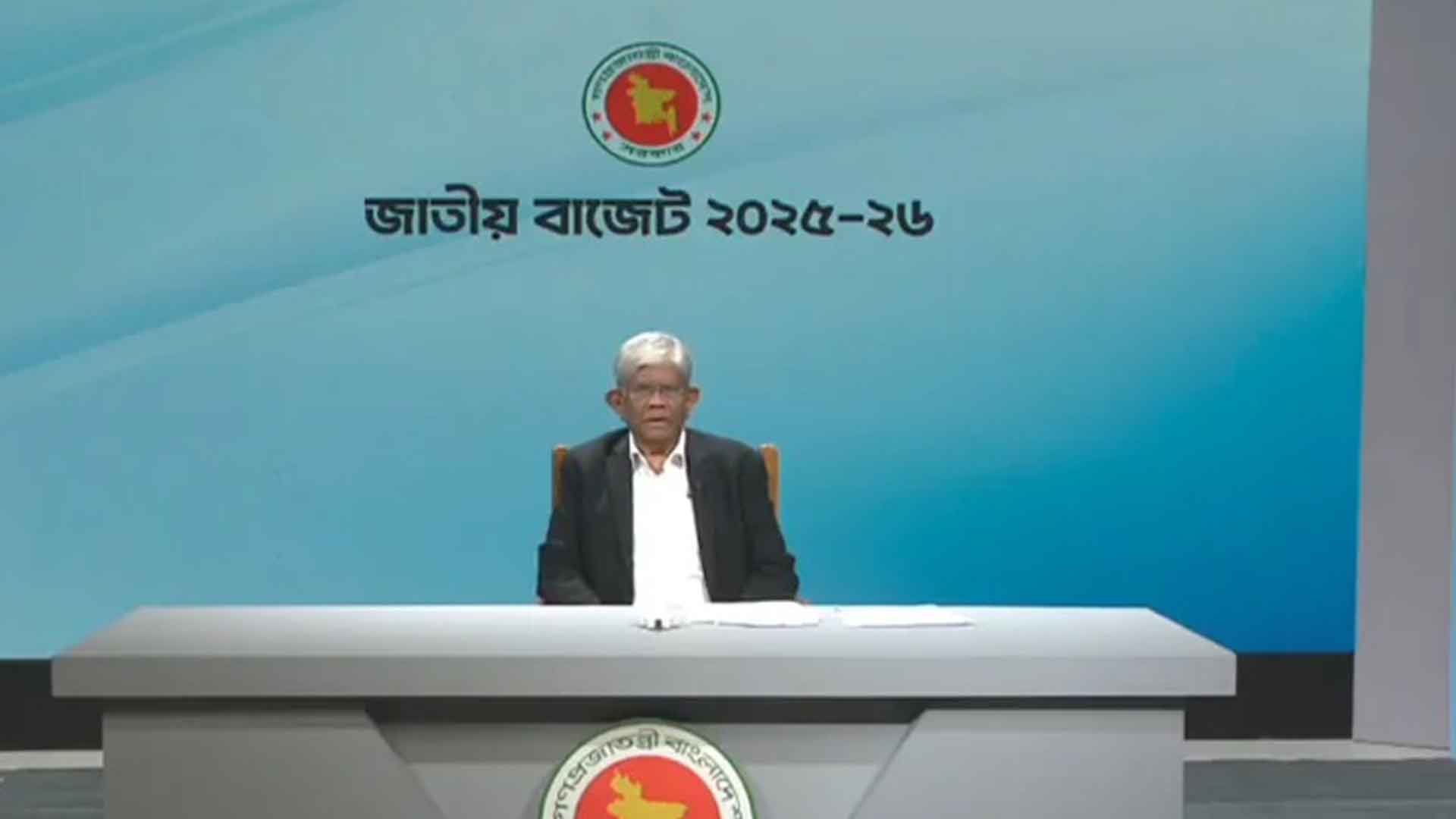
Salehuddin Ahmed highlights budget priorities
Finance Adviser Salehuddin Ahmed said on Monday in a strong reaffirmation of the government’s dedication to transforming education that the national budget of the fiscal year gives “special priority on creating the environment for a science-based, technology-driven and employment-oriented education system.”
Speaking to a gathering of journalists, economists, and teachers in Dhaka, Ahmed underlined that this budget represents a significant turning point in terms of the educational orientation of the nation. “Our young people have to be ready with tools and knowledge to participate in the global economy,” he said. “This year’s budget is a turning point it recognises that education is no more only about literacy; it’s about skills, innovation, and adaptability.”
A calculated turn towards innovation
Along with increased expenditures on STEM (Science, Technology, Engineering, and Mathematics) education at the secondary and higher levels, the 2025–26 budget includes a notable rise in funds for technical and vocational training. The action marks a deliberate turn towards getting students ready for the needs of the information economy, digital platforms, and automated, increasingly defined labour market of the twenty-first century.
Among the various important steps Salehuddin Ahmed listed were the creation of model scientific schools in undeveloped areas, more scholarships for women in technological disciplines, and alliances with the business sector to offer on-the-job training.
“Employment-oriented education is not an abstract concept now,” he said. “We’re directly including skill certifications, internship programs, and career direction into the curriculum.”
A Long-Term View towards Equity and Expansion
This fresh emphasis on education coincides with growing worries about young unemployment and a mismatch of skills in the workforce. According to recent surveys, many graduates still lack the necessary skills for the real-world demands even although enrolment in universities has climbed. Targeting the core causes outdated syllabi, inadequate technology infrastructure, and restricted teacher training the government seeks to close the distance between academics and business.
Salehuddin Ahmed also underlined the important need of fair access: “We are particularly focused on rural and marginalised communities, ensuring that no student is left behind due to geography or socioeconomic level.”
Reception & Responses
Development partners and professionals in education have praised the declaration. The change “a necessary leap towards modernising our education landscape,” said BRAC University’s education policy expert Dr. Samira Rahman. Additionally showing interest in working on fresh pilot projects in line with government goals are international donors and institutions such UNESCO and UNICEF.
Some voices warn, nonetheless, that actual test will be implementation. Former governor of Bangladesh Bank, Dr. Atiur Rahman remarked, “budgets can promise a lot,” but “effective execution especially in training teachers and monitoring quality is where success or failure lies.”
Ahead Looking Ahead
The emphasis on science, technology, and employment-readiness in education signals a strategic change as Bangladesh keeps on its path towards knowledge-based middle-income country. For millions of pupils, this may imply a future rather than simply a classroom.
“Education is our bridge to a smarter, fairer, and more prosperous Bangladesh,” Salehuddin Ahmed said optimistically at closing. The basis is laid by this budget.