
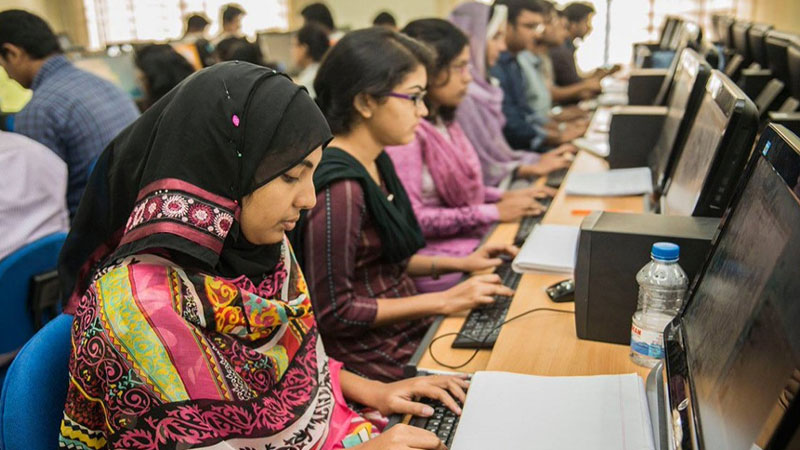
How global funding is opening new doors for Bangladesh’s youth
Bangladesh has received a big-bucks boost to address one of its most critical problems — youth unemployment. The World Bank on Wednesday approved 150.75 million dollars in additional financing for the flagship RAISE project that is working to expand sustainable economic opportunities for low-income youth and micro-entrepreneurs across Bangladesh.
Investing in Youth, Empowering Communities
This new funding is anticipated to serve approximately 176,000 additional young people, in addition to the 233,000 currently served. The ambition is evident: to equip young Bangladeshis — especially women and people in areas at risk from climate change — with the skills and resources necessary for either meaningful employment or to expand small businesses.
Participants in the extended RAISE scheme will have access to a complete support package. It will include skills training, apprenticeships, entrepreneurship development, and microenterprise access—a combination that could help to remove historic obstacles to employment and business expansion in the informal economy.
Beyond Jobs: Addressing Structural Barriers
What makes this phase of the RAISE project unique is its focus on women’s empowerment and social infrastructure. One of the most revolutionary elements is that we hear for the first time about quality, affordable home-based childcare. Through training women and providing start-up grants, the project seeks to address not just the demand for childcare but also the shortage of providers.
It achieves several objectives simultaneously:
It is increasing women’s labour force participation.
Generates new care economy jobs, and
Promote the health and development of young children.
Women participants will also be provided with Life skills training that enhances confidence, decision-making skills, and labour market readiness –crucial but often ignored dimensions of economic inclusion.
Reaching Rural and Climate-Vulnerable Areas
The additional investment will enable the RAISE project to extend beyond larger cities into more rural and deprived communities where job opportunities are limited. Prioritising climate-resilient livelihood opportunities that are designed to increase the ability of at-risk communities to adapt to environmental shocks as well as enhance income security.
In addition, the project will improve job intermediation to support employment outcomes. These involve holding job fairs, linking employers to trained candidates, showing young people how to market themselves, and negotiating contracts.
Proven Impact, Scaled Up
The RAISE project has already proven to be successful. Over 80% of program graduates found employment within three months of training completion, and young microentrepreneurs have earned more and implemented better business practices.
Now in its second year, having launched in 2021, the initiative has:
Supported over 50,000 COVID-affected microentrepreneurs,
Registered 250,000 returned migrants for reintegration assistance; ADMISSIONS: -Number of individuals arriving in the country in each specific category (e.g., diversity, immediate family member, or preferences), and the number admitted in those categories.
Delivered economic inclusion services to more than 122,000 participants, of whom 55 percent are women.
With the current approval, total World Bank assistance for the RAISE Project amounts to $350.75 million.
A Step Toward Inclusive Growth
With the large cohort of first-time entrants to the labour market in Bangladesh each year, investments like RAISE signify a move towards inclusive, skills-based growth. With employment, entrepreneurship, childcare, and climate resilience all in the mix, the project provides more than short-term relief — it also sets thousands of young Bangladeshis on a path to resilience.