
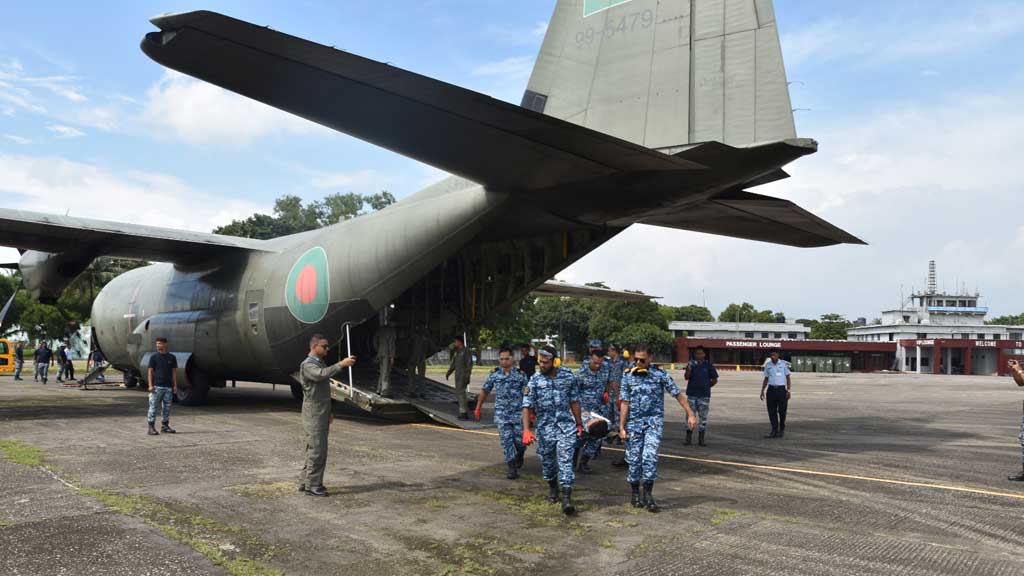
Chittagong, a port city steeped in history and strategic value, has been transformed of late into a centre stage for ramped-up American military engagement. In recent months, we have received reports that dozens to more than a hundred US troops have been staging in Chittagong and its surrounding areas, participating in joint exercises with the Bangladeshi military and utilising their transportation infrastructure, including airports such as Shah Amanat International Airport, as well as Bangladeshi military bases.
What’s happening? Here’s a look at what is known, what remains speculation and the implications for Bangladesh, the region, and the geopolitics of the Indo-Pacific.
What We Know
Joint Military Exercises
The US has been working with Bangladesh in exercises such as Operation Pacific Angel-25-3, unexploded ordnance removal or neutralisation, engineering construction projects, and medical treatment. Another exercise, Tiger Lightning-2025, which primarily focuses on counterterrorism, jungle warfare, and medical evacuation, also encompasses various other aspects.
Transport Aircraft Activity
U.S. Air Force C-130J Super Hercules have been landing in Chittagong and using Shah Amanat International Airport, as well as air bases nearby. These planes are multi-role in the sense that they can be used for transportation, cargo, and disaster relief operations, and can operate under austere circumstances.
Personnel Deployment
Recent estimates indicate that 90-100 U.S. troops are participating in various exercises, and approximately 120 U.S. Army and Air Force personnel are staying at hotels in Chittagong (e.g., Radisson Blu Bay View), some of whom are not formally listed in the guest logs.
Strategic Location & Facilities
It is strategically located near the mouth of the Bay of Bengal and the coastal regions of various countries in Southeast Asia.
What People Are Speculating
Countering China’s Influence
Discussion: Much of the commentary implies that U.S. interests in Bangladesh are part of a regional Indo-Pacific strategy and proposition aimed at offsetting China’s growing presence. By deepening ties with the U.S., Bangladesh could further realise its strategic pivot.
Geopolitical Pressure & Diplomacy
A new government in August 2024 would leave open the question of whether new leaders will try harder the next time against Chinese pushback. A newly receptive attitude toward cooperation with outside powers is seen as setting the table for greater US intervention by some analysts. It is reported that some arrangements (such as secrecy of accommodation and absence of public announcements) raise questions about transparency and sovereignty.
Humanitarian & Disaster Readiness
Bangladesh is particularly prone to natural disasters, including cyclones and floods. Exercises like Pacific Angel are nominally human-centred, optimised for disaster relief, medical assistance, and response coordination. A good equivalent in motivation may be capacity building on aid.
Security, Counterterrorism, Regional Stability
A few drills will concentrate on counterterrorism, jungle warfare, and general readiness. Because it is situated near the troubled regions like Myanmar and the coasts, Bangladesh sees an advantage in preparation.
What It Might Mean
Stronger U.S.–Bangladesh Security Ties
The increasing number of joint exercises and military cooperation indicates that Bangladesh is gradually aligning with the U.S. military strategy (at least in terms of exercises and training) in the Indo-Pacific. This may also mean further sophisticated transfers of equipment, increased capacity-building and even more permanent or semi-permanent arrangements.
Regional Tensions, especially with India
Bangladesh borders Indian northeastern states and, among other places, is in the vicinity of some strategic regions (the Bay of Bengal, sea routes). It is being closely watched by Indian analysts, as any increase in U.S. military presence in Bangladesh would alter the regional equations. Some see it as eroding India’s “strategic depth.”
Domestic Political Impacts
Secrecy may also escalate concerns about issues such as sovereignty, the rule of law, and democratic oversight within Bangladesh (e.g., troops not being registered at hotels, vague immigration or customs procedures reported in certain sections of the media).
Humanitarian and Disaster Preparedness Gains
One bright spot is that this could improve Bangladesh’s response to natural disasters and humanitarian crises. Better coordination, infrastructure, and coordination with outside players should ensue.
Chessboard for a New Great Power Contest
Thanks to a growing number of major powers (U.S., China, and others), the Indo-Pacific has become an arena for competition. Bangladesh is strategically situated, as it borders Myanmar and lies near key sea lanes in the Bay of Bengal. Chittagong may also be ‘mortar in a long-term strategic position’ – an outpost, or at least rest-and-repair facilities, to further regionalist aspirations.
What We Don’t Know (Yet)
The entire universe of U.S. troop activities (some have been officially announced; others are murky or entirely covert).
– Whether this is a temporary blip related to certain activities, or the beginning of an enduring U.S. presence in the region, or rights to use bases.
Information on any pacts or deals between Washington and Dhaka concerning the freedoms available to U.S. troops (access, mobility, diplomatic immunity, etc).
— The response of China, India, Myanmar, and other neighbours in the medium to long term.
Conclusion
The changing role of Chittagong in U.S. military cooperation with Bangladesh tells us a rich story. At one level, it is about disaster relief, preparedness, and training. It is closely tied to a larger geopolitical contest in the region, particularly within the Indo-Pacific. For Bangladesh, these may include opportunities (e.g., enhanced aid, infrastructure, and training rates), as well as risks such as sovereignty issues, regional diplomatic pressure, and domestic political repercussions.
As things evolve, transparency will be key: agreed statements and public statements about how these forces are used or not used could help ensure that this relationship stabilises rather than adds to the potential for trouble in a complex security environment in South Asia. YouTube Channel Link