
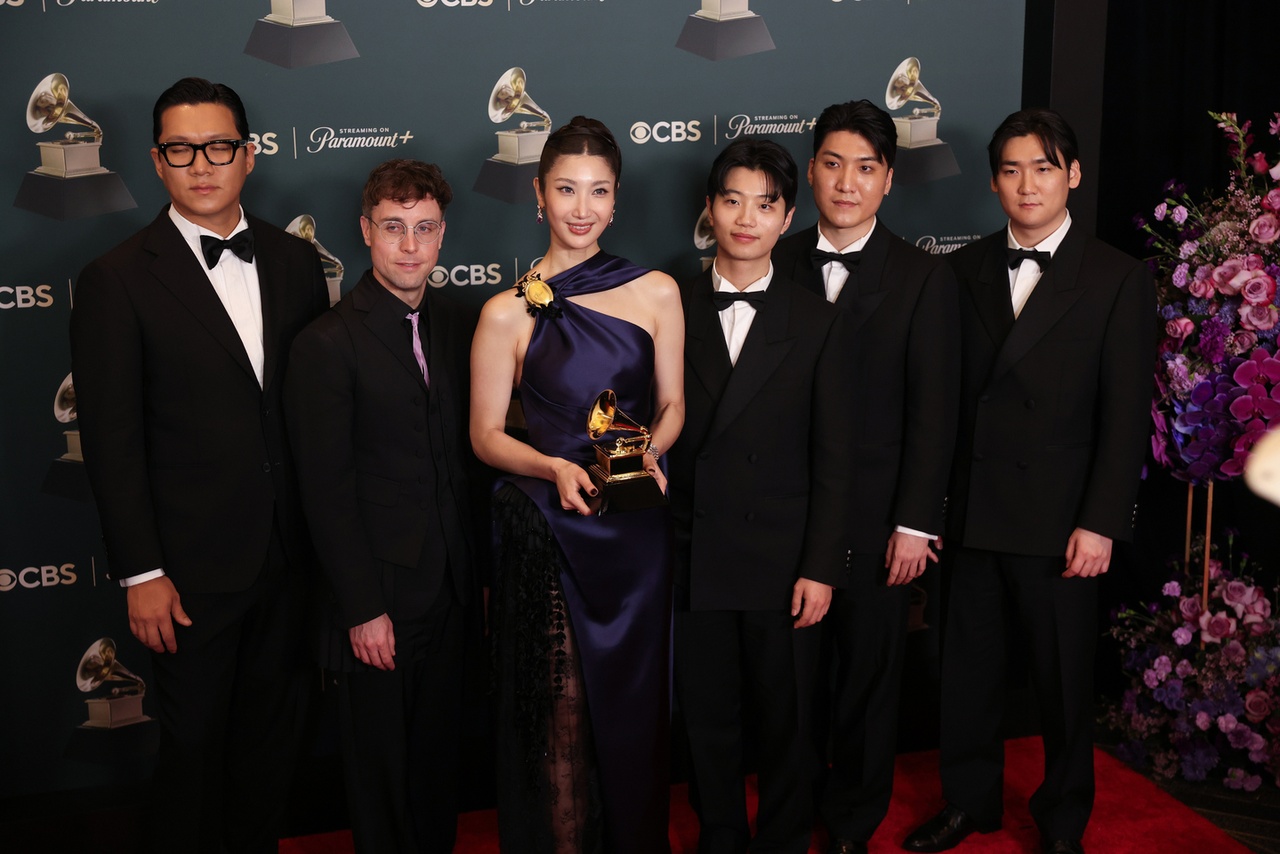
How ‘Golden’ finally cracked the Grammy Vault
SEOUL – For years, the Grammy Awards felt like a glittering gala with a “No K-Pop Allowed” sign tacked firmly to the door. Despite sold-out stadiums and record-breaking streams, the industry’s highest honours remained frustratingly out of reach.
That changed on February 2, 2026.
When the fictional girl group Huntrix—voiced by the powerhouse trio of Ejae, Audrey Nuna, and Rei Ami—secured the trophy for Best Song Written for Visual Media, the glass ceiling didn’t just crack; it shattered. The winning track, “Golden”, from the animated sensation K-Pop Demon Hunters (affectionately dubbed Kedehun by fans), has officially handed South Korea its first major K-pop production win.
Breaking the ‘Cookie-Cutter’ Stigma
While K-pop has previously found success in technical and classical Grammy categories, the “Big Four” and genre-specific pop awards remained elusive. Even global titans like BTS and Blackpink, despite multiple nominations and historic performances, faced a “conservative” voting bloc.
Music columnist Kim Do-hoon suggests this win is a direct rebuttal to long-standing industry prejudices. “The Grammys have traditionally placed strong emphasis on perceived musical quality, an area in which K-pop is not always widely recognised due to its ‘cookie-cutter’ reputation,” Kim told AFP. “They are known for avoiding heavily produced music. ‘Golden’ changed that narrative.”
“With that barrier now breached, K-pop artists may finally begin to receive the recognition they deserve. A path has now been forced open.”
striderz1971, YouTube Commenter & Fan
A Night of Milestones
The evening wasn’t just about a single win; it was about presence. In a historic first, K-pop occupied two slots in the prestigious Song of the Year category:
- “Golden” (Huntrix)
- “APT.” (Rosé & Bruno Mars)
While the night’s top honours eventually went to Billie Eilish and Finneas O’Connell for “Wildflower”, the dual nomination of “Golden” and “APT” served as a loud reminder that K-pop is no longer a “sub-genre”—it is the standard.
Local media outlets, including the Kyunghyang Shinmun daily, noted that while the main prize went to Eilish, the nominations themselves were “meaningful milestones”. For a show often criticised for being slow to adapt, the 2026 Grammys felt like a genuine embrace of the Hallyu wave’s musical complexity.
The Future is ‘Golden’.
The victory for Kedehun demonstrates that the Recording Academy is finally looking beyond the choreography and costumes to appreciate the songwriting and production at the heart of the genre. As fans celebrate from Seoul to San Francisco, one thing is clear: the “K-pop barrier” is officially a thing of the past.
Editor’s Note
At Cinebuzz Times, we have tracked the intersection of cinema and the K-pop phenomenon for over a decade. The win for “Golden” represents more than a trophy; it is the culmination of a global cultural shift. This month’s feature celebrates the artists, producers, and animators who turned a fictional movie group into a real-world historical milestone.