
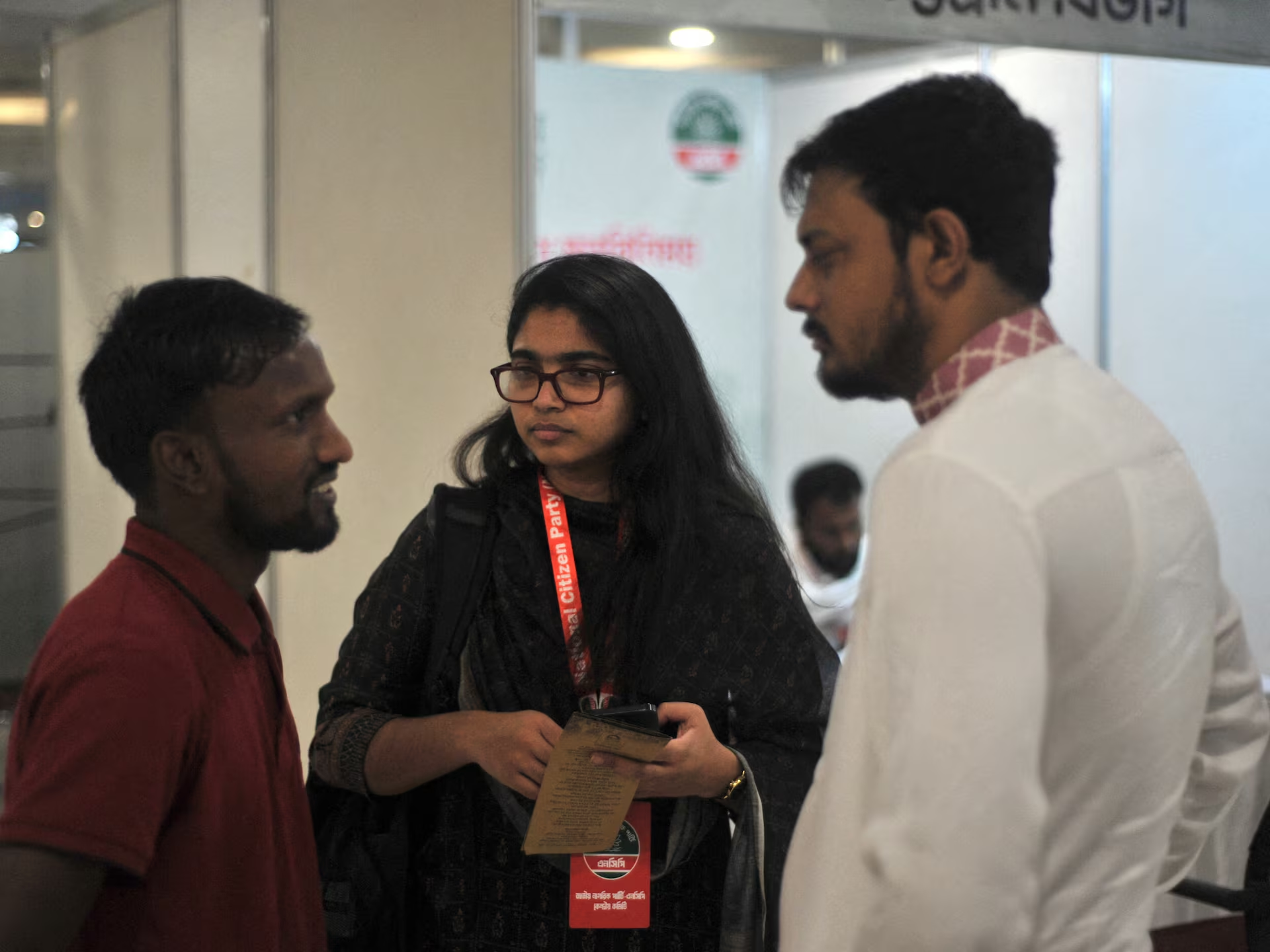
Political disempowerment – people’s sense of being excluded and insignificant in politics – is one of the most severe yet least-discussed problems in Bangladesh. Formally a parliamentary democracy, it is not at all difficult to see how much the population are, consciously or otherwise, becoming frustrated at what they have and seeing just how negligible effect their desires actually seem to have.
The Meaning of Disenfranchisement
Political exclusion encompasses more than simply denying the vote. It also contains political, socio-cultural, and psychological obstacles to people’s participation in political life. Electoral no competitiveness, the threat of political violence, distrust in institutions and a pre-determined outcome are some of the typical forms of disenfranchisement in Bangladesh.
Politics has become something that happens to many voters, and particularly young and first-time voters, rather than with them.
Electoral Participation and Public Trust
Bangladesh has long had a tradition of mass political mobilisation. But turnout has been lopsided in recent years, and public confidence in elections has waned. Claims of vote rigging, intimidation and administrative bias (real or imagined) have combined to lull most people into disinterest.
It is the responsibility of institutions like the Bangladesh Election Commission to refrain from calling elections free and fair. But successive scandals have eroded their trust with parts of the electorate. Only the secure knowledge that all votes will be counted without prejudice can lead to an engaged citizenry. When we lose faith in that notion, voting becomes more symbolic than empowering.
The Shrinking Space for Opposition
The functional democracy relies on competitive politics and credible opposition. Opposition parties in Bangladesh, especially the Bangladesh Nationalist Party, have been arrested, tried in court, and denied the right to assemble. The ruling Awami League says the measures are legal and needed for stability, but critics counter that they further tilt an already uneven playing field.
With opposition voices muted or missing, voters have few choices, further suggesting that elections lack actual competition.
Youth Disengagement and Fear Politics
More than a third of Bangladeshis are under the age of 30, and youth participation is crucial for the future health of the country’s democracy. But many of the country’s younger members do not engage at all politically out of fear for their safety, being monitored and penalised years later at school and work.
Student politics, which was once a space seen as developing future leaders, has now become known for factional fighting and patronage loyalty over policy debate and ideology. And so, an entire generation is now in danger of coming of age with no knowledge of democratic ideals and personal responsibility.
Marginalised Voices at the Periphery
Political exclusion in Bangladesh also has a geographical and social dimension. Rural people, ethnic minorities, and garment workers, as well as urban slum-dwellers and the disabled, have extraordinarily little access to political processes. Their demands — including those for land rights and workplace safety — are seldom reflected as policy priorities.
While women’s political representation has improved, it continues to be restricted by patriarchal structures of domination as well as party gatekeeping and tokenism. System of reserved seats. Some Questions. Fifty-one seats have been reserved for women in the National Assembly, and 16 in the Senate. Still, the mechanism, as well as the criteria adopted for these reservations, do not provide a link between reserving political space through quotas and encouraging/ rewarding work with constituents.
Media: Expression and the Culture of Silence
Political inclusion depends on freedom of expression: reporters, activists, and artists in Bangladesh work under a guarded climate. Restrictions on digital expression and national security, ostensibly for protection, have faced accusations of stifling dissent and investigative reporting.
As citizens feel less safe sharing their political opinions, online and off, the alienation deepens, making democracy a procedural drill rather than a lived experience.
Beyond Ballots: Reimagining Democratic Engagement
Political disenfranchisement is about more than an occasional vote. It requires structural reforms, second states, independence of the judiciary, defence of civil rights, and fresh political dialogue. Civic education, open governance, and inclusive policy can help regain trust in the system.
There’s also the vital role that cultural fora—films, theatre, literature, and independent media—can play. They humanise political issues, challenge silence and build spaces of reflection that transcend party lines. In this way, the act of storytelling is a form of resistance against that disenfranchisement.
Conclusion
Bangladesh’s odyssey as a democracy is far from over. The political marginalisation, although deep-seated, is not irreversible. The issue now is whether the state and political parties, alongside civil society, can collaborate to rebuild this trust and reposition citizens at the heart of government.
Democracy does not live on ballots alone — it lives on faith. And once people no longer believe their voices matter, democracy starts to erode.