
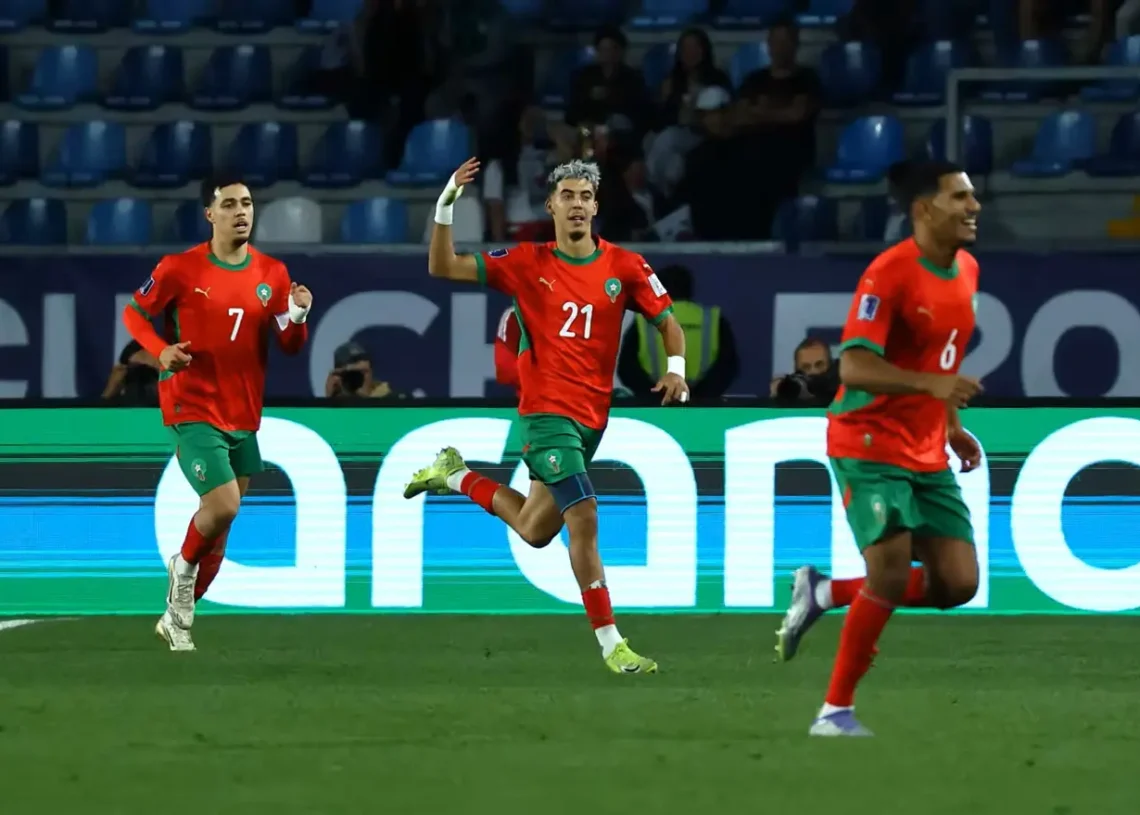
In a milestone occasion for African and youth football, Morocco’s U-20 side whisked Africa aside, outsmarting the established world giant in the game of calm and “learn”: Argentina U-20 0—2, to lift the FIFA U-20 World Cup title in 2025. The final, in Santiago, Chile, ended with a score of two-nil to Morocco and their first-ever triumph at that level, making a profound statement on the world platform.
Here is a look at how this extraordinary feat came about—what it all means, the drama of the match, and what it could mean going forward for Moroccan (and African) soccer.
From underdogs to champions
Morocco was not considered one of the giants in the competition, unlike Argentina, Brazil, and several European countries. But as the weeks ticked by in Chile, they grew more disciplined and focused on their efforts.
Road to the final
Played in Chile between 27 September and 19 October 2025.
Morocco’s march featured success in the group stage and knockout wins against tough opponents, especially a big semi-final wins over France on penalties.
They had to get through Argentina, the most successful team in U-20 World Cup history (six previous titles), in the final.
This context underscores what was at stake: not just a title for Morocco, but a symbolic blow against the established youth football order.
What the win signifies
It is Morocco’s first FIFA tournament title at any age.
Morocco is also the first Arab country to win the U-20 World Cup.
Only one African team, Ghana U20 2009, has previously won the tournament, making it a significant opportunity for African football.
The final: Key moments and tactical touch. These are the main talking points from the final on November 02, 2019.
Match summary
Location: Estadio Nacional Julio Martínez Prádanos, Santiago (Chile).
Final Score: Morocco 2, Argentina 0. Morocco beats one of the best! The Atlas Lions didn’t wait long to pounce after that second goal.
Scorer: Yassir Zabiri (Morocco): he put his side in front with a free kick in the 12th minute and followed that with a close-range shot shortly after.
Tactical highlights
Argentina had much of the possession and territorial advantage, but it couldn’t translate that into goals. Each time an attacking thrust arrived, a disciplined Moroccan defence swatted it away.
Morocco chose discipline: absorb pressure and strike quickly if possible. The early goal transformed the dynamic, and Argentina was suddenly forced to chase the game.
The free kick that yielded Morocco’s goal was emblematic of the planning and execution; it wasn’t a fluky strike but a well-rehearsed set piece.
Morocco maintained their lead throughout the game by defending resolutely, making accurate substitutions, and maintaining their composure under pressure.
Why was it significant?
Morocco pulled Argentina out of their comfort zone by getting an early goal and then keeping a clean sheet. Argentina, a team that is typically used to dictating games, was instead left to chase one rather than savour the usual dominance it holds over the age group at this level. That Morocco was able to withstand and then profit from negotiations only speaks volumes about their mental and tactical growth.
Implications and what comes next.
For Morocco and larger African/Arab football
It will be interesting to see if they invest more in young Moroccan players now that they have won this victory. The so-called golden generation might serve as a template for younger players.
It is a reminder that youth sides from Africa can challenge the traditional “elite” of the world’s youth nations. That could shift the emphasis on scouting, coaching, and development across the continent.
For the Arab world, Morocco’s success is a benchmark: proof of concept of what can be achieved when development programmes dovetail with ambition.
For Morocco’s future senior prospects
Many of the players in this U-20 squad will be earmarked for Morocco’s senior team. They will be all the better for facing some big game pressure in later tournaments.
The one obvious exception will be the U-20 coach, Mohamed Ouahbi, who will have a higher profile and whose approach and doctrine are something that may trickle down to Morocco’s overall footballing architecture.
A lesson for youth tournaments
The findings suggest that youth tournaments are about more than just talent; they also concern preparation, mindset and even identity. Morocco’s win was about character as well as quality.
It also confirms that the world-books youth scene is becoming ever more competitive and balanced — there is no longer an expectation of guaranteed dominance by traditional powers.
Final thoughts
The roar of celebration from Morocco’s players, fans and footballing community following the final whistle in Santiago was undeniably historic. This is not just a victory for one generation: it’s the culmination of years of groundwork, ambition, and self-belief.
Against a nation like Argentina, for whom winning at the 20 level and exporting talent and authority is second nature, Morocco’s performance said, “We are here. We belong.” It is a statement of intent.
Going forward, the task will be continuing to create momentum, not allowing this victory to be a one-time thing, but also building toward the next level about U-23s, the senior national team and the club.” If Morocco’s youth programme can capitalise on this, the soccer world may need to take note: The young “Atlas Cubs” could be the vanguard of a new age.