
Progress and Challenges
Health Care Bangladesh has come a long way in health and healthcare in the last few decades. Previously challenged by pervasive poverty, malnutrition and inadequate medical facilities, the country has made impressive progress in life expectancy, maternal and child health, and combating communicable diseases. However, there are still outstanding issues as Bangladesh now has the double burden of the communicable and non-communicable diseases, as well as increasing pressure on the health system.
Progress in Public Health
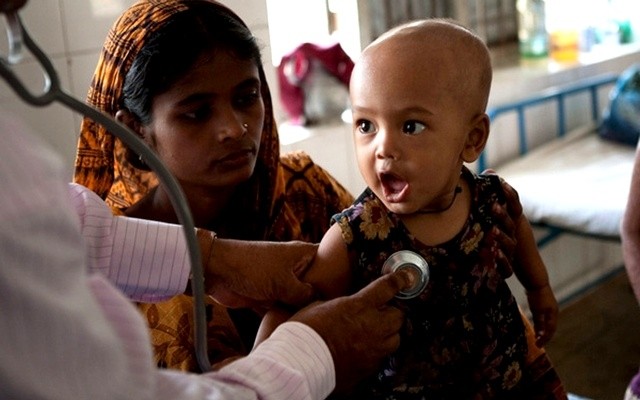
Maternal and child health is the area where Bangladesh has achieved significant success. The country has also made progress in lowering maternal mortality, thanks to increased availability of midwives, community health workers and educational campaigns. Immunisation in childhood has also been acknowledged worldwide, lowering incidents of preventable diseases including measles and polio.
Family planning is another success story. Bangladesh’s fertility rate has plummeted from more than six children per woman in the 1970s to just over two today, largely due to the widespread availability of contraceptives and successful community outreach. Life expectancy has also risen substantially and now exceeds 72 years.
The Healthcare System
The healthcare of Bangladesh is a combination of public, subsidized private and totally private services.
Public health care: The government runs a four-tier system ranging from community clinics in rural areas to highly specialised hospitals in large urban centres. Community clinics, opened in 1998, have extended rudimentary health care to the villages, though staffing and supplies continue to be challenges.
Private sector: There has been a rapid flourishing of private hospitals and diagnostic centres especially in the urban areas, particularly Dhaka and Chattogram. Although, they can provide better facilities but still are unaffordable for many because of the prohibitive cost of these centres.
NGOs: People working for organisations such as BRAC and Grameen Health are still the driving force in providing cost-effective services in underserved areas.
Emerging Challenges
Still, Bangladesh has serious obstacles to overcome:
NCDs-diabetes, high BP, heart diseases, cancer etc–are increasing ‘clearly and tangentially’ due to lifestyle habits and urbanisation.
Environmental health threats air pollution, unsafe drinking water, climate change also remain grave.
Health inequality remains acute: Rural populations and low-income groups frequently find it difficult to access quality care.
Understaffed hospitals Because of the lack of trained doctors and nurses in Bangladesh, which has fewer doctors and nurses for its population than most developing countries, hospitals are overcrowded, and waits are long.
Moving Forward
The government has promised Universal Health Coverage (UHC) by 2030, part of the SDGs. Achieving this will require:
Functional primary healthcare from the community.
Training and keeping doctors, nurses, and health workers.
The insurance schemes are expanding for the purpose of out-of-pocket reduction.
Using technology to increase access for populations in remote areas for example, telemedicine, digital medical records, and mobile apps.
Conclusion
Bangladesh’s healthcare tale is one of triumph and turmoil. The nation has shown itself an innovator and resilient in overcoming adversity. Now, as it confronts new health threats in a swiftly changing society, the future health of all Bangladeshis will depend on greater investments in healthcare, as well as equitable access to those services.