
How Bangladesh’s mobile operators powered Tarique Rahman’s homecoming
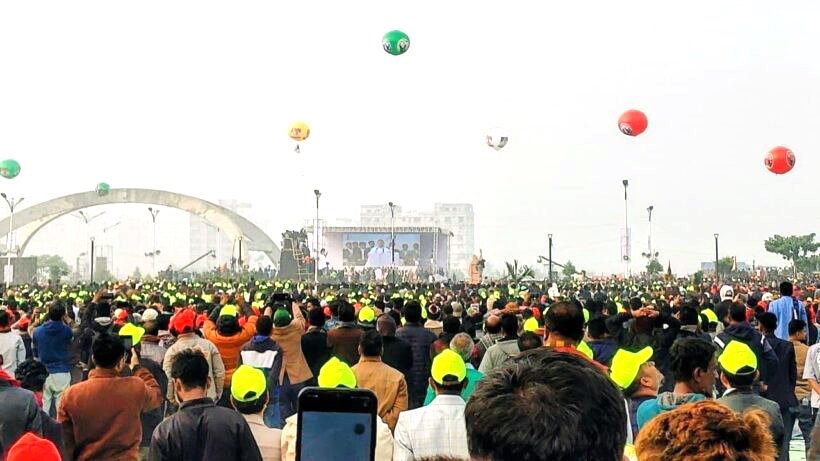
When Bangladesh Nationalist Party (BNP) Acting Chairperson Tarique Rahman returned to the country after about 17 years, the homecoming was not just political but also digital. His rally, held on a vast field at the sprawling “July 36 Motorway” space close to Kuril Bishwa Road, was a huge test for Bangladesh’s mobile network resilience as millions of supporters turned up both physically and online to see him.
Aware that there will be an unprecedented strain on voice calls, live streams and social media usage, mobile operators put in place several huge technical innovations. Just along the 300-foot-wide Purbachal Road corridor, for example, connectivity planning was developed to accommodate up to five million users—on a scale we seldom see outside national emergencies or mega sporting events.
Politics Meets Network Engineering
Large political rallies in Bangladesh are no longer limited to microphones and banners. They are live-streamed, tweeted, shared, and recorded in real time. Realising this, operators have increased antenna coverage, tower capacity, and migrated the RF resources from the west to the mid part of the Kuril-Purbachal track.
All three private operators used AI-based network management, enabling them to dynamically balance call traffic (voice and data) as congestion moved across the country and through various times of day. The goal was straightforward but challenging: to keep calls connected and videos streaming without lagging.
Operators on the Ground
Robi Axiata to deployed five Cellular on Wheels (COW) to bolster coverage. Robi also deployed more mobile towers, shared capacities with nearby sites and conducted uninterrupted speed tests during the event to keep an eye on live performance, according to its Chief Corporate Officer Shahed Alam.
Banglalink established 3 COWs and did all the necessary technical preparations exceedingly early in the morning. The network reinforcements were also provided to crucial routes like the airport corridor, Banani, Gulshan and Pragati Sarani and its adjoining areas — places where crowd influence was expected, besides being media-centric.
Grameenphone, the country’s largest operator, declined to specify how many portable towers it had. But it verified that pre-existing infrastructure capabilities were greatly expanded, according to crowd estimates, with additional safety buffers in place to avoid service interruptions.
Information about plans by state-owned Tele talk could not be obtained at the time of reporting.
A Quiet Success
One of the most telling results may have been what did not occur. “There are absolutely no major complaints overnight anymore about dropped calls, slow internet and choppy video,” the post went. For an event of this scale, the sound of silence is deafening.
The welcome for Mr Rahman highlighted a larger truth of Bangladesh’s current political landscape: In modern politics, digital infrastructure is as critical as physical presence. This time, however, — behind the speeches and slogans — a meticulously engineered mobile network helped millions stay connected, showing that in contemporary Bangladesh, political moments are driven not just by people but also by signal strength.