
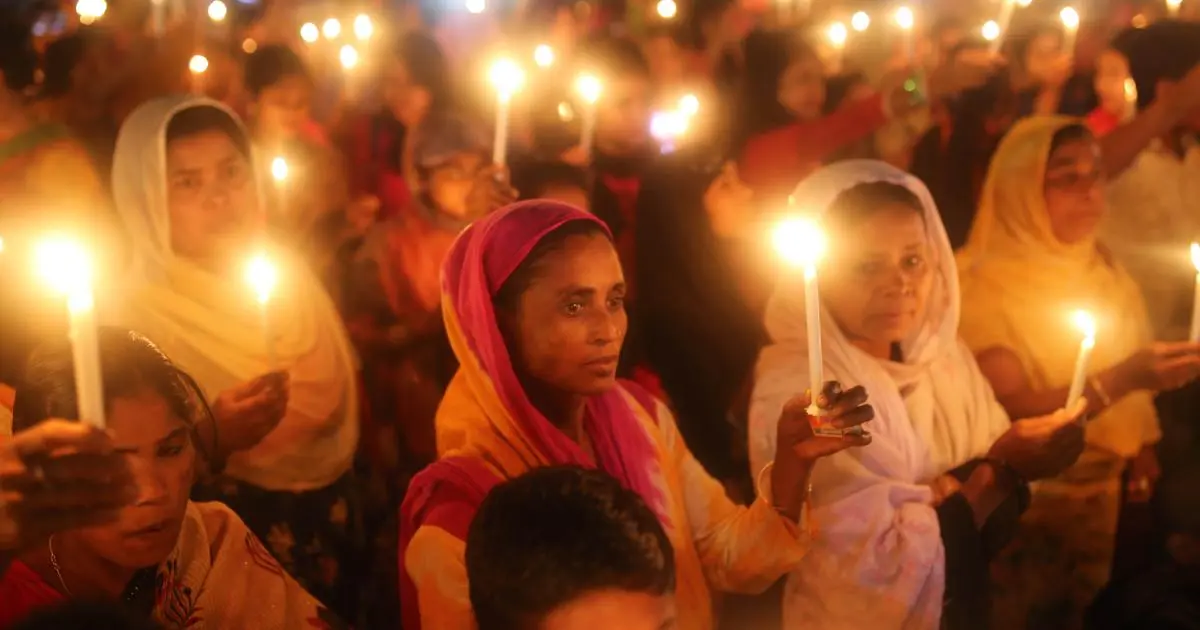
Why Bangladesh must act now to protect its girls and secure its future
Bangladesh is standing at a crossroads. A new round of data from the Bangladesh Multiple Indicator Cluster Survey (MICS) 2025 tells the stark truth: despite progress made and policies in place, our girls are stuck in a cycle of child marriage, early pregnancy, malnutrition, and environmental threats that not only put their future at risk but also that of the nation.
This is more than a social problem; it’s a global human development emergency.
The Secret Price of Bangladesh’s Climate-Friendly Cook Stoves
The phenomenon of girls being married off well before becoming adults, frequently anaemic and malnourished, pains Mlambo firmly. Within two years, these child brides become young mothers themselves, and they often give birth to babies who are chronically malnourished. The result is a catastrophic chain reaction: low birth weight, stunting and wasting are rampant, sabotaging an entire generation’s growth and cognitive development.
To complicate the picture further, a recent national survey has found something even more troubling: elevated levels of lead in children’s blood throughout Bangladesh, particularly in the capital. Lead poisoning, usually invisible and symptomless, can quietly steal children’s intelligence, damage their behaviour, and stunt their growth. Its effects are irreversible.
The consequences are stark. What if Bangladesh doesn’t get a grip on child marriage, early pregnancy, malnutrition, and lead exposure? For if we act thus, then we run the most fearful danger of nullifying our descendants’ intelligence and their capacity for useful toil; in which case, the progressive development of our national life would be below par.
Fresh Data Offers a Disturbing View. What to know:
There are several pressing issues that the MICS 2025 report draws our attention to:
Fifty per cent of Bangladeshi women and girls are still at risk of early marriage and early pregnancy.
Two out of every five children have dangerous levels of lead in their blood.
Child labour has spiked, with 9.2% of children ages 5 to 17 now victimised, up from 6.8% in 2019.
Another 1.2 million children are at risk of being pushed into the labour force.
Children who do not go to school are four times more likely to be child labourers.
These issues are deeply interconnected. One harmful practice leads to another: child marriage leads girls out of school; when girls have no education, their work is underpaid, and as they grow up, some are pulled into informally low-paid labour; poverty drives early marriage; and malnutrition and environmental poisons compromise healthy growth.
An Alarming Increase in Lead Poisoning
Noteworthy is the ubiquity of exposure to lead:
38% of children 1-5 years old and 7.5% of pregnant women in this area have increased blood lead levels.
In the capital region, 65 per cent of children are exposed to lead.
Lead poisoning transcends wealth:
More than half the children affected by it belong to affluent families.
About 30% come from less affluent families.
Lead can enter the body through old paint, soil, water, and dust contaminated with lead, as well as through some consumer products. Since symptoms frequently go unnoticed, only a blood test can determine exposure. And once lead is in a child’s bloodstream, the harm to his or her I.Q., hearing, behaviour, and growth can never be undone.
For the first time, MICS 2025 offers a national snapshot of this environmental menace. It is now incumbent on policymakers to act.
Maternal Health and Nutrition: A Worsening Crisis
Other indicators are equally bleak:
It in children: 9.8%; wasting: 12.9%.
Maternal anaemia prevalence is still unacceptably high (52.8%).
The teen birth rate has spiked from 83 to 92 per 1,000 girls.
These estimates further demonstrate the pressing need for Bangladesh to strengthen maternal and child health, breastfeeding, and quality nutrition services.
Child Marriage: A Slow Decline, But Not Enough of One
While rates of child marriage have seen some reduction since 2019, progress is painfully slow:
47 per cent of women ages 20 to 24 were married before they turned 18.
13% were married before 15.
Education and income matter a lot:
Women with no education (69%) or from the poorest households (65%) are twice as likely to marry early as girls from wealthier homes.
A geographical divide persists:
Rates have fallen in Dhaka and Sylhet.
But they are still elevated in Rajshahi and Khulna.
Interestingly, in Sylhet, only 29% of women were married before they were 19, almost half the national rate. The report is unclear about why Sylhet stands out, but the success there offers essential lessons for the rest of the country.
UNFPA offers another sobering estimate: at the present rate, Bangladesh would require more than 200 years to end child marriage. This is out of sync with our national aspirations in gender equality and sustainable development.”
A Bold and Immediate Call to Action
Child marriage is not simply a cultural practice; it’s a rights violation. It prevents girls from going to school, exposes them to early pregnancies, increases maternal mortality, and keeps people poor and intellectually stunted.
Now is the time for Bangladesh to break this vicious circle.
Stronger laws and stricter enforcement
More adolescent health and education investment
Community-oriented responses to change entrenched cultural attitudes.
Specific interventions to address exposure to environmental pollutants, particularly lead.
Enhanced maternal and child nutrition services.
More protection for children at risk of work and exploitation
All children everywhere deserve to grow up healthy, educated, safe and empowered. Harmful traditions should hold back no girl, and the opportunity to reach her full potential must not be denied.
The Future of Bangladesh Depends on the Girls We Are Protecting Today
If we don’t act, it is going to be generations of children with impaired potential physically, mentally, and socially. But if we fully commit to breaking the cycle, we can build a better, more prosperous Bangladesh where no girl is left behind.
The choice is ours. And the moment to act is now.