
Growing, changing and at a crossroads
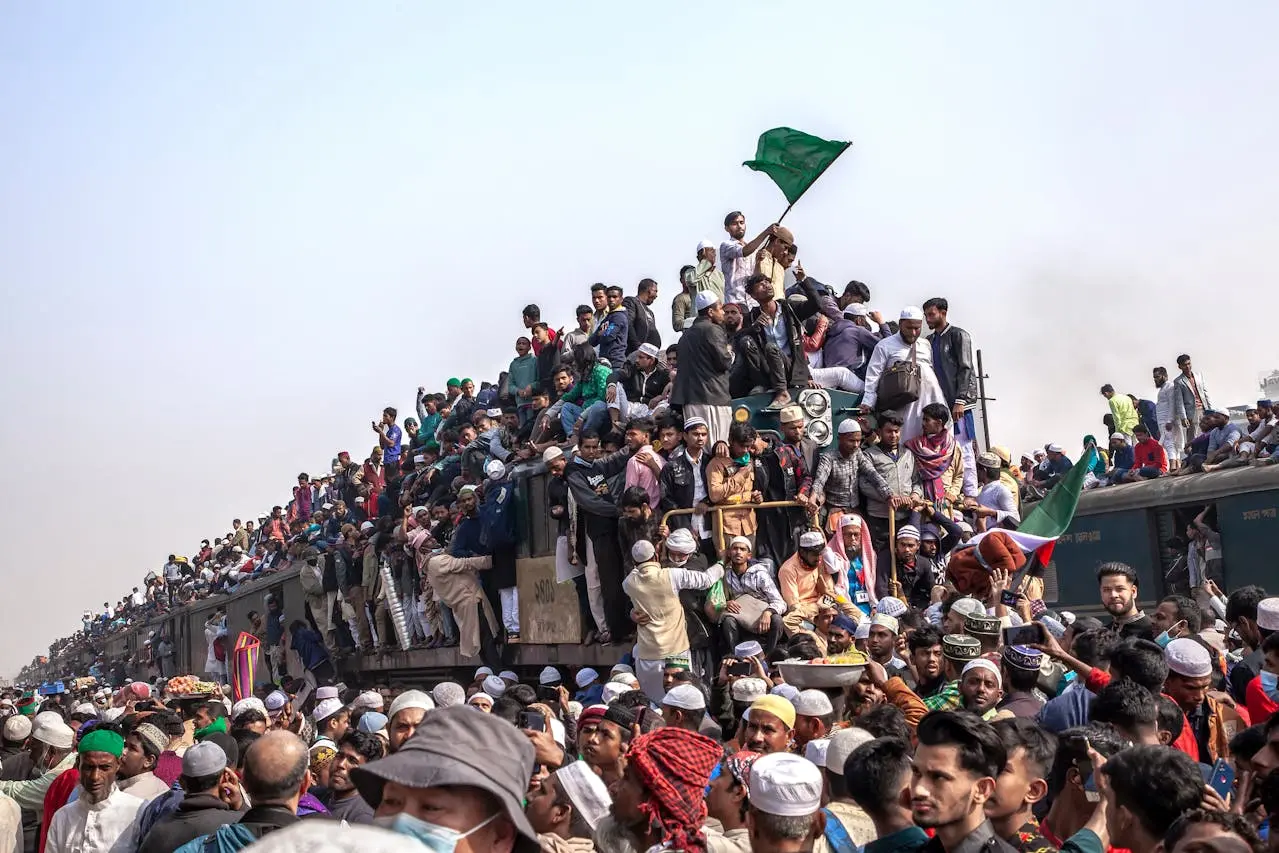
Bangladesh has always been a people’s country: colourful, resilient, and crowded, as it is stretched out on low-lying plains. What follows is a look at the growth story of a nation whose population, as we approach the mid-2020s, retains the basic outlines of its rise but with indispensable details that help put in focus changes in patterns and new questions.
The population is still growing, but the pace has decelerated.
Demographics: As per recent demographic data, Bangladesh’s population in 2025 is around 176 million, making it one of the eight most populous countries in the world. The population still grows each year, with several million more residents arriving through births than leaving through deaths.
Yet the overall size is growing more slowly than in previous decades. Bangladesh has historically been gripped by ultrarapid population growth: It went from about 40 million in 1950 to more than 170 million today.
In recent years, the annual growth rate has been around 1% to 1.2%. That means that while growth is still growing, it’s doing so at a pace far slower than in previous decades, when the population grew at rates well over 2%.
Which is not necessarily a surprise: Countries tend to see their birth rates fall as they develop, a dynamic playing out across the world. There appears to be every reason to assume that, with so many factors working in its favour, access to education, better healthcare and urbanisation would progressively reduce the average family size. In the 1970s, women in Bangladesh commonly had more than six children in their lifetimes; now they average about 2.3, a profound demographic shift.
Stabilisation: A Complex Question
In light of these trends, some people should speculate: Has Bangladesh’s population stabilised? The answer is not just yet. Although total growth has slowed, the overall population continues to rise and is expected to do so for years. A correct stabilisation with births broadly matching deaths and net migration has not yet been reached. World Population Prospects projections from the United Nations indicate that the population will continue rising for some time before eventually levelling off later this century, as fertility rates fall further and life expectancy continues to increase.
There are two key complications to this picture:
Fertility trends. After decades of decline, fertility rates had levelled off and may have even risen in some surveys, new data showed.
An ageing population: There are more old people in Bangladesh. A young population has historically driven growth, but the number of elderly will increase in the demographic structure in the future.
So, though Bangladesh’s population growth has moderated since it was exploding, births still outpace deaths. Instead, the nation remains in a halfway house of lower growth with continued higher growth.
What It Means for Bangladesh
The implications of these trends are myriad and complicated:
Economic Opportunity: A large, young population can be a demographic dividend, with many people to contribute to an economy that provides them with education and opportunity and drives productivity and growth.
Resource Pressure: A high population density of over 1,300 people per square kilometre places intense demand on land and water, as well as housing, transportation, and public services.
Family Planning Challenges: While family planning efforts have historically been successful in reducing fertility, recent accounts say staff deficiencies and poor access to contraceptive services in the country compromised these gains.
Urbanisation: Cities, particularly Dhaka, are growing rapidly as people move from rural areas to seek work and education – this presents pressing infrastructure and planning requirements.
Thoughts on the Population of a3m1
Population debates often fall back on simplistic binaries of “too many” or “too few.” But the demographic truth of Bangladesh is more complicated.
Yes, the country is growing, and many places feel crowded. But the slowing growth rate is also a result of positive social changes, including higher education for women, better health services, and greater awareness of reproductive choices. Those are signs of progress, even with challenges.
Meanwhile, continued population growth, even at a slower rate, also demands proactive policies. For Bangladesh to harness its demographic potential, it needs to sustain its investment in family planning, education and job creation, particularly in technology and manufacturing. It can’t just be achieved by merely wishing for stabilisation; it is necessary to have this sustainable, inclusive development.”
Instead of treating the population as only a burden, or else as an unvarnished boon, maybe we can think about it in Bangladesh’s case as its most amazing human resource and the source of unparalleled inventiveness and creativity if meticulously nurtured.