
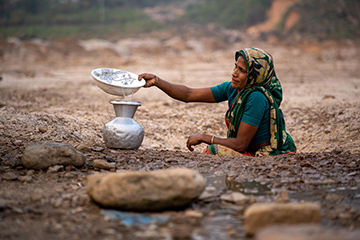
Access to safe drinking water and sanitation is among the most basic of human rights. The entitlement of this right in Bangladesh has been increasingly attained; however, millions continue to endure daily nightmares, as they are deprived of safe drinking water and hygienic sanitation. The struggle for water and sanitation in Bangladesh is a tale of success, inequity, and stubbornness – but with no end in sight.
A Tale of Progress and Paradox
Bangladesh has made substantial progress in increasing access to drinking water since independence. In the 1970s and 1980s, tubewells became a national solution, eliminating water-borne diseases such as cholera and diarrhoea. Nowadays, groundwater is the primary source of domestic consumption for households, especially in rural areas.
But these successes have been accompanied by an unexpected crisis: arsenic. Millions of people are being poisoned, quietly and slowly, by naturally occurring arsenic in their groundwater. Arsenic-related skin lesions, cancers and cardiovascular diseases are still a significant public health problem. Although mitigation strategies have been implemented, knowledge and availability of other safe-water sources are not uniform.
Sanitation: Open Defecation to New Challenges
Bangladesh is frequently held out as a global success story in Open Defecation Reduction. The country reduced open defecation rates dramatically over the last 20 years – through community-managed sanitation programs, behavioural change campaigns, and government initiatives. Even simple latrine use today is everyday in most low-income rural communities.
However, improved sanitation is not necessarily safe sanitation. Many of the latrines are badly built, serving multiple families or without functioning waste disposal facilities. The crammed living conditions in urban environments, especially informal settlements and slums, render sanitation facilities inadequate and unsafe to use for women, children, and persons with disabilities.
Urban–Rural and Social Inequalities
Geography and wealth account for much of the variation in access to water and sanitation across Bangladesh. In rural areas, arsenic contamination and seasonal water scarcity are challenges, alongside remoteness from safe water points. The coastal zone is already struggling with increased salinity from sea level rise, making the freshwater supply even scarcer.
The situation is different in cities. Rapid urbanisation has overwhelmed infrastructure. Slumdwellers often rely on illegal or shared water connections and must pay higher prices for lower-quality water. Sanitation centres are usually communal, in disrepair and unsafe at night, leaving women vulnerable to harassment and health problems.
Marginalised communities – such as ethnic minorities, climate-displaced families and people living on less than 1 dollar a day – are hardest hit, exacerbating cycles of illness, lost income and restricted or interrupted learning.
Women, Children, and the Secret Burden
Women and girls are disproportionately affected by water and sanitation problems. Women are the prominent water collectors, who must travel long distances in many households. Conclusion: Absence of private latrine is associated with MHM affecting the girl child’s schooling and has long-term social implications.
Children are especially vulnerable. Unsafe water and lack of sanitation are among the leading causes of child malnutrition, stunting and diseases which could have been avoided. Against this backdrop, these health problems influence the development of cognition and educational outcomes (and hence future lives) well before we reach adulthood.
Climate Change: A Growing Threat
Bangladesh’s water and sanitation struggles have been compounded by climate change. Floods contaminate water sources and destroy sanitation facilities, while drought reduces water availability in the north. Cyclones and storm surges destroy the fragile freshwater supplies along coasts, leaving communities to depend on contaminated sources.
With climate impacts intensifying, water security is no longer only an issue of development but one of survival for millions.
The Way Forward
Universal provision of clean water and safe sanitation necessitates more in Bangladesh than mere infrastructure. It requires long-term planning, community involvement, solutions that are resilient to climate and good governance. Investments in such technologies as surface water treatment, rainwater harvesting, on-site sanitation systems and faecal sludge management must be prioritised.
Awareness is also crucial, and that of water safety, hygiene habits, and health risk regarding contamination. Collaborations between government agencies, NGOs, private enterprise, and local communities are already making a difference and should be further developed.
Conclusion
Bangladesh is at a critical juncture. The country’s gains in water and sanitation are genuine and laudable, but they remain fragile in the face of inequality, climate change, and rapid urbanisation. Water and sanitation are not just a technical challenge; they’re about dignity, health for all, gender equality, and social justice.
To maintain its progress, however, Bangladesh must make the safe provision of drinking water and sanitation for all a top priority. Access to clean water is not just a matter of life or death; it’s about the right to live with dignity.