
The Rohingya funding shortfall and what must come next
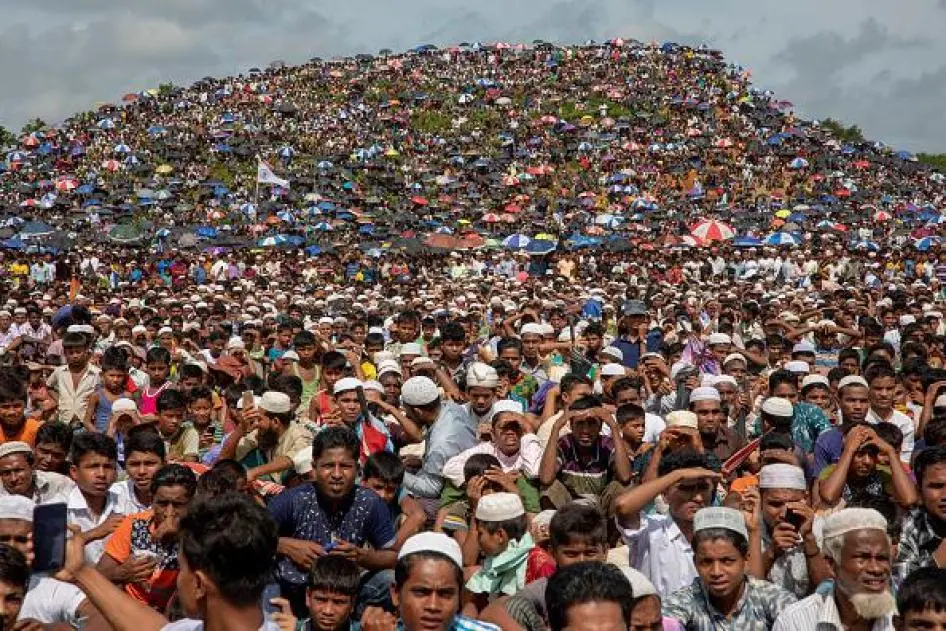
The humanitarian crisis affecting the Rohingya continues to hover dangerously on the edge of collapse, and the key culprit is money. Eight years after the mass influx of Rohingya refugees into Bangladesh, the response intended to sustain them and their host communities is now facing a severe funding shortfall, threatening health, education, food and protection programmes alike.
The latest figures from the United Nations High Commissioner for Refugees (UNHCR)-led appeal show the 2025 Joint Response Plan (JRP) for the Rohingya and host communities seeks US$934.5 million for the first year of a multi-year strategy. Yet by 21 July 2025, only approximately 35 per cent of that amount (about US$325.1 million) had been received. That leaves a gap of nearly US$610 million, a shortfall with concrete consequences.
The significance of the shortfall is not abstract. For example, the World Food Programme (WFP) has warned that it may be forced to halve monthly food vouchers for more than one million Rohingya refugees in Bangladesh unless sufficient funding arrives. The UN notes that any funding cuts in key support areas, such as food, cooking fuel, shelter, and health care, will have “dire consequences” for one of the most vulnerable refugee populations. In July 2025, UNHCR similarly sounded the alarm that essential services for over one million Rohingya are at risk of collapse unless additional funds arrive.
Why is the funding gap so large? Numerous factors have converged:
- The Rohingya response is now a protracted crisis. The initial influx in 2017 from Rakhine State, Myanmar, was followed by more arrivals, and the refugee camps in Cox’s Bazar and beyond are now long-term, with refugee and host-community needs entwined.
- Global donor priorities have shifted: as geopolitical tensions rise, humanitarian budgets are under pressure. Some major donors have reduced aid or shifted focus, and for the highly vulnerable Rohingya, this means fewer options.
- The complexity of the crisis: It is not simply a refugee situation, but also includes host-community support, education, protection (especially for women and children), health, and the risk of future new arrivals. The multi-sectoral nature means the cost is high and the appeal considerable.
- The economic climate: With rising global humanitarian demand, limited donor budgets and competing crises (climate disasters, conflict, displacement worldwide), it becomes harder to sustain generous funding.
The human impact of the funding gap is dramatic. The reduction of food rations not only poses the direct risk of hunger and malnutrition but also exacerbates protection risks. Camp populations living without sustainable livelihoods become more vulnerable to exploitation, child labour, early marriage, trafficking and violence. Education programmes already stretched risk being curtailed, and health services likewise face disruption.
What Are Our Hopes for the Future – and What Must Be Done?
Despite the worrying figures, there is still room for hope provided the international community acts decisively. Here are key areas where we must focus:
- A renewed funding push
The first step is clear: donors need to step up. Meeting the US$934.5 million target for 2025 must become a global priority. If the appeal remains only 35 per cent funded this year, the window for scaling up support will lapse, with dire consequences. A coordinated donor conference focusing on the Rohingya response could help rally renewed pledges and turn commitments into payments. - Flexible, multi-year commitments
One of the lessons from protracted crises is that one-year appeals are not enough. Longer-term, predictable funding provides aid agencies with the confidence to plan and invest in sustainable programmes (education, livelihoods, infrastructure) rather than stopgap survival strategies. The Rohingya response deserves this shift from reactive to strategic. - Investing in resilience and host-community support
The Rohingya camps are adjacent to the Bangladesh host communities and are heavily dependent on humanitarian aid. Building resilience through skills, livelihoods, improved infrastructure, education for children and youth will reduce long-term dependency and help integrate support for both refugee and host populations. This makes funding more sustainable and programmes more impactful. - Innovative partnerships and private sector involvement
While governments remain the most prominent donors, private philanthropy, corporate partnerships, and new financing mechanisms (social impact bonds, refugee-led enterprises) have significant potential. Engaging non-traditional donors can help close the gap, reduce risk, and bring new ideas into the response. - Accountability, transparency and impact-driven programming
When funding is scarce, donors rightly demand results. Demonstrating impact, such as improved school attendance, reduced malnutrition rates, and protection outcomes, can help maintain and even increase donor confidence. Aid agencies must invest in monitoring, evaluation and storytelling that connect funds to outcomes and human stories. - Sustaining pressure on safe-return and durable solutions
Lastly, the humanitarian response cannot remain purely emergency-oriented. The ultimate hope must also include safe, voluntary and dignified return to Myanmar for the Rohingya, or alternative durable solutions if that is not feasible. Funding needs to support not just survival today but a longer-term vision for rights, citizenship, and belonging. The United Nations General Assembly has reiterated calls for urgent action on protection, justice and lasting solutions.
Conclusion
The funding crisis facing the Rohingya response is a clear call to action. Behind the figures are millions of human lives, children at risk of hunger, families without livelihoods, girls and boys deprived of school, and communities living in limbo. If the current funding gap continues unaddressed, the progress of recent years could unravel, and the world may face a humanitarian catastrophe in one of the largest refugee settlements of our time.
Yet there is hope. With stronger global mobilisation, flexible and strategic funding, investment in durable solutions and a broader partnership base, we can help transform the Rohingya response from survival mode to resilience mode. The choice is ours, and the time to act is now.