
Bangladesh shivers at the onset of every summer. As it stands now, however, dengue is no longer a seasonal alarm. It has transformed into an all-year-round risk of attack. Again, the nation faces a crisis with no satisfactory answer.
According to the Directorate General of Health Services (DGHS), by late October 2025, dengue in Bangladesh had caused more than 56,000 cases and over 250 deaths.
Although not as disastrous as 2023, when the virus took 1,705 lives, the persistence of such staggering numbers speaks to a more profound truth: Dengue is no longer an outbreak; it has passed into being part of the country’s daily experience.
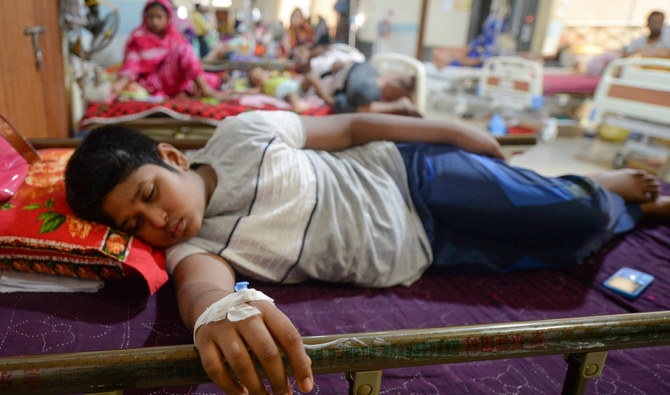
Hospitals in Dhaka and other places continue to overflow with a variety of feverish and dehydrated patients of all ages, even after two years. But it is one thing to cure dengue and quite another to prevent it. The origins of this crisis are no mystery whatsoever.
Bangladesh’s changing climate has rewritten the mosquito’s timetable. Once, Aedes aegypti reproduced only during rainy seasons; it now reproduces year-round, thanks to rainfall fluctuations combined with humid heat and standing water from unplanned development in large cities.
Construction sites hollow out and become the perfect breeding ground for mosquito larvae, just as do blocked drains, roof tanks, and plastic containers left in parks or lying between bedsheets of grass – everywhere you turn nowadays, there are places like this right here waiting, ready and inviting, that can breed thousands upon thousands of new plague organisms per minute! It is not just a Dhaka problem.
From Chattogram to Rajshahi, from Faridpur to Sylhet, dengue now covers the entire country — a clear example of how disease rides on people’s movements, construction scale, and climatic variation, all of which are human responsibilities, working in concert with a changing environment.
The fever wards, the medical academics warned, had gone rural. After 2023’s horrific outbreak, the government promised a “new strategy”. City corporations launched fogging drives, the health ministry told people to clean their surroundings, and hospitals stocked up on fluids and test kits. But as 2025 Low also demonstrates, these are mainly reactive measures.
The pattern is wearily familiar: mosquitoes breed silently, cases skyrocket in the middle of the year, hospitals fill up, fear spreads, and fogging machines are hauled out farther into town but are invariably late.
Fogging creates a false sense of action. It eliminates the majority of yesterday’s adult mosquitoes quickly, yet the newly hatched larvae continue to survive. The population will repopulate within a few days.
Genuine mosquito control begins with larval source reduction, eliminating stagnant water, enforcing sanitary construction sites, and getting communities into the habit of cleaning continuously, not just during “anti-dengue weeks”.
Until prevention becomes an everyday practice, Bangladesh will remain stuck in this cycle.
A Health-Care System under Fire
The nation’s health professionals have adapted remarkably. Today’s physicians are much better prepared to spot warning signs such as early upset stomachs, vomiting, plasma leakage, and rapid loss of platelets and begin treatment before their patients go into shock.
Although overwhelmed, hospitals manage big patient loads with limited resources. The DGHS now offers daily data updates, reporting not only infections but also discharges. Such transparency did not exist a few years ago.
But medical management alone cannot control a vector-borne epidemic. ICU shortages continue at district hospitals outside of Dhaka. In small towns, families often make long journeys for emergency care, a delay that can be fatal. Prevention still lags significantly, and the gap between health authorities and local governments hinders coordinated action.
Naturalizing a National Disaster
What’s most pernicious is how easily Dengue has become part of the background noise. Every year, the news flies on: “Cases Up”, “Hospitals Overflow”, “Fogging Drive Begins”. Public attention dwindles after a few weeks.
This kind of normalisation is dangerous. Accepting hundreds of preventable deaths as part of everyday life is not resilience; instead, it represents submission. We will be further away from eradicating dengue the more accustomed we become to it. Bangladesh cannot let this crisis become “just another season”.
Smart Prevention Is Necessary – As for next steps for DENGUE CONTROL TO REALLY ADVANCE in urban environments, first, we need to place an obligation on all management levels. City corporations should enforce rigid guidelines: construction sites that leave water standing in pools and mud ditches everywhere should be penalised; landlords have to keep their rooftop tanks covered; waste disposal systems must stop plastic and rubbish from gathering rain.
Secondly, it involves removing obstacles that obscure vision. In modern cities, the comprehensive vector control model integrates not only larval control and community monitoring but also biological innovation.
Bangladesh might experiment with Wolbachia-based mosquito control, a proven method of injecting mosquitoes with a harmless bacterium that blocks transmission of the dengue virus. Countries like Indonesia and Brazil saw dengue cases drop by up to 60% after this kind of intervention.
Third, Community involvement must become real, not symbolic participation. Bureaucracies alone cannot overcome dengue. Households, schools, and even grassroots organisations need to inspect their water containers, drains, and flowerpots regularly.
Doing that without a sense of urgency, it turns into mere theatricals. Lastly, there must be readiness at the level where the infection is local. Each hospital ward for dengue should have the necessary emergency equipment, fluids, and trained personnel. Patients should not die for lack of timely transport to Dhaka.
‘Actionable’ Information: Bangladesh shows progress in data collection. Bringing the daily dengue bulletins out of DGHS is already something valuable; yet information by itself does not save lives.
Data should function as an alert signal at the earliest possible moment. Take, for instance, if a certain ward reports a jump in cases, then immediate focused cleanup activities, larvicide treatment, and public mobilisation need to follow—not red tape or “that’s the process.”
The media, too, should play a responsible role. Instead of merely counting deaths, coverage should highlight local outbreaks, risk areas, and who ought to intervene in time.
A Shared Responsibility
Finally, dengue is not only a matter for medicine to solve. It is a failure of governance, a design flaw in urban planning, and a test asking us how we adapt to climate change.
Every division – Health, Local Government, Environment, Housing – should consider it shared territory. Co-operation, not recrimination, should mark our reaction.
Bangladesh and public health have successfully navigated numerous disasters together. The same resoluteness will shift the balance vis-à-vis dengue. Yet it will take political determination to sustain enforcement and year-round popular participation.
Conclusion: The “New Normal”, an Outright Rejection
In 2025, Bangladesh will be better prepared to deal with dengue. Over 50,000 individuals have improved due to better medical care. However, simply surviving does not equate to fully benefiting from these improvements.
If we continue to view dengue as an unchangeable aspect of life, it will certainly remain so. The struggle against this disease needs to move from clinics to homes, from dithering to vigilance, and from one-print salesmen in times of crisis to standing pat over a long time.
To treat dengue as “just the way things are” is to embrace a quiet national tragedy. The time is long past for taking control of these little insects from the public and making them an integral part of our government and ethos.
In dealing with dengue, every drop of standing water, each week of delay, and every lost life tell an open-ended story that Bangladesh cannot repeat.