
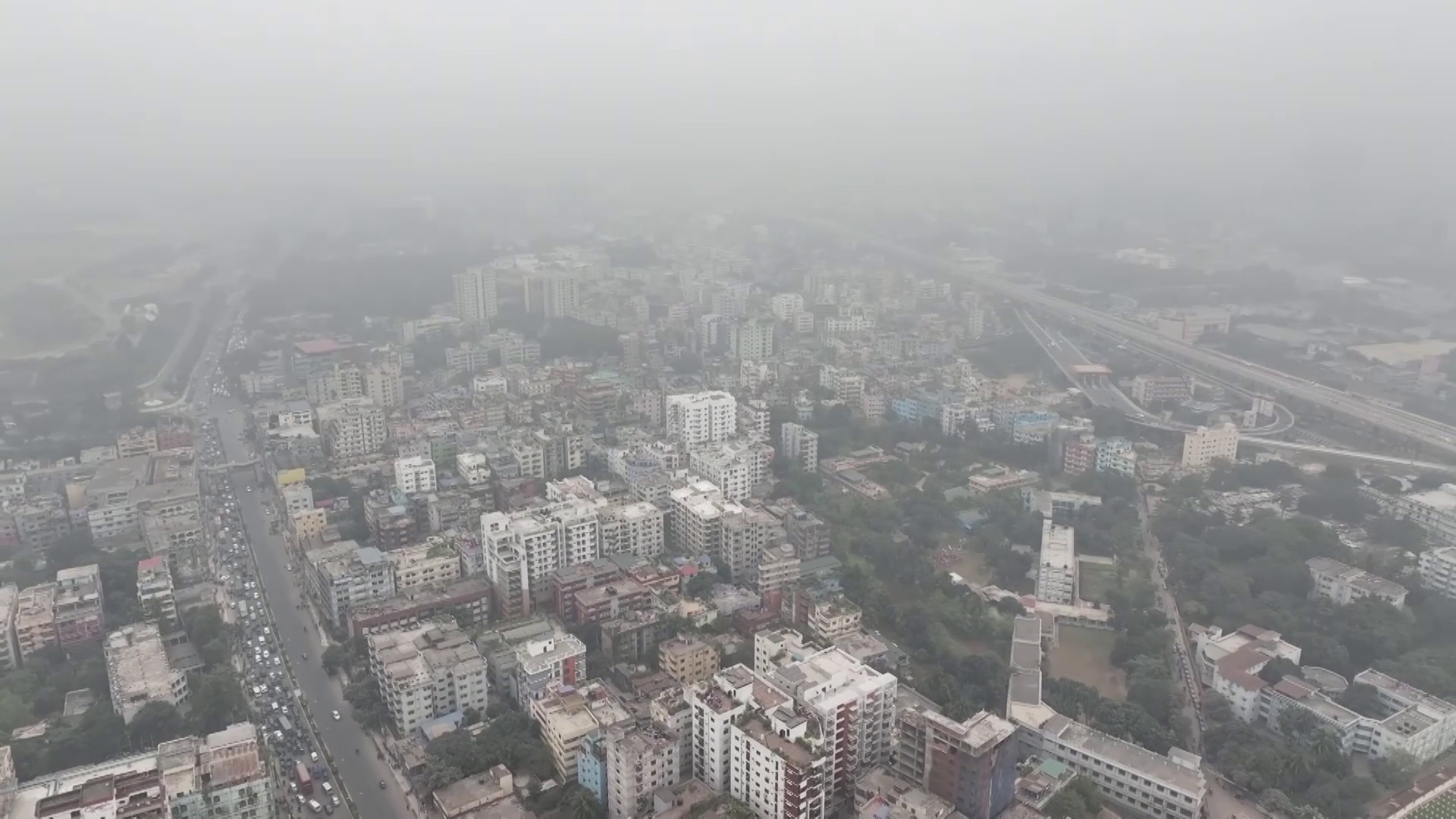
As always, on countless mornings in Dhaka, haze obscures the city, even before the sun labours up over it. Not fog now: The skyline becomes a broken breath that lies face down and out. However, it is completely unclear which direction we will take from this point forward. On October 25, 2025, Dhaka, with an Air Quality Index (AQI) of 169, ranked among the world’s top five most polluted cities— squarely in that unhealthy range.
This is all old news for the people who live here.
The Invisible Killer
Pollution in Dhaka doesn’t amount to anything more than recording blurry sights and putting up with foul smells. It’s what we can’t see that hurts the most—PM2.5, the tiny particles too small for human eyes but lethal for human lungs.
These particles are smaller than a grain of dust. They come in through our nostrils, lodge deep within the lungs, and even get into the bloodstream. The World Health Organisation says that the safe limit for PM2.5 is five micrograms per cubic metre. But Dhaka often registers readings that are 10–15 times that amount.
Doctors have called this a slow emergency. Studies link long-term exposure with heart disease, lung cancer, asthma and children’s developmental problems. It is now thought that air pollution causes more deaths in South Asia than malaria, HIV, and street accidents combined.
What’s Poisoning Our Air
Dhaka’s filthy air is not caused by a single factor; rather, it results from multiple elements contributing to the rapid urban growth that lacks regulation.
Brick kilns
Thousands of obsolete brick kilns surround cities in all directions, burning coal, wood, and even refuse. They produce thick, black smoke, which hangs on well into the dry season. Despite the existence of technologies that are cleaner for the environment, many continue to run illegally under local influence and weak control.
Construction dust is a common killer of urban air quality in many developing countries, such as China and India. Dhaka will not stop building, whether it’s roads, sewers, flyovers or towers. Sand and cement lie open to the wind-blown dust from moving trucks, or sometimes, there are no machines spraying water on it at all. Every gust of wind becomes a grey cloud, a dry snowstorm that fills your eyes and nostrils simultaneously.
Traffic emission is another big problem for Dhaka. The city shudders under a burden not just from within but from without too: two cities called Home and Work, which are interdependent. Buses and trucks move slowly across the streets, almost as if they are asphyxiated; pale yellow fumes escape from diesel engines that have seen better days or at least the attention of a skilled mechanic, while traffic jams trap the toxic air, turning rush hour into a public health hazard.
In the city’s outskirts and slums, people still burn their garbage, often including plastics and medical waste as well as general refuse. This smoke mingles with Dhaka’s own thick air, an odourless but deadly embrace. As you walk towards it, you sense an absence in what should be familiar smells.
When it’s winter, still, with no wind to disperse the pollutants and no rain to wash them away, they stay in the air. If it happens that a morning is also cold, then even worse will be its smoggy squalor. Correction on Wuhan, China. While any day with a blue sky in Los Angeles is a gift, some Chinese cities never see their streets. The conditions that prevent their city from breathing are often caused by unregulated industry, for example: In 1982, residents of Taiwan’s Chemical Valley were hit with a high number of suicides and other serious health problems, later traced to waste treatment plants around the plants, which had been dumping untreated effluents into the river
The phrase “downwind” refers to a concentration of industrial facilities, which means it obviously doesn’t give off much pollution because there is expendable. Not-so-new news from Washington: according to official figures from 1993 on, there were 60 more toxic chemicals being released by US facilities each year than by factories. This is entirely due to how pollution is breaking out in China. Government bureaucracy and distant callousness may reduce the frequency of these tragedies, but orders for closure at affected areas often go only up, years after damage has been done, so ramifications are rarely taken seriously anymore. Small in scope than the grimness of this global picture be, Americans are used to having our image of reality tailored to us by television and newspapers.
We must learn to live with it. When the AQI reaches a higher level, experts suggest staying away from the outside and not exercising. They also recommend indoor air purification. However, if you live in Dhaka, such advice can be viewed as a harsh joke. How does a rickshaw puller “stay away from outside” as the term defines it?
How does a garment worker in Mirpur afford an air purifier? All 3.6 billion people can do is breathe and hope their bodies stay strong.
That is why in Dhaka, this has become a social issue as well as an environmental one. Clean air has quietly become a privilege, which you can have if you are rich enough to rent better housing, buy bigger ones that come with air filters, or afford an office from day one with air filters.
Suffering But Silent Health Crisis. Doctors at public hospitals are seeing an increase in asthma cases, chronic coughs, and heart strains. Parents proudly report children who “cough all year long.” The elderly get winded just walking to the corner store.
According to data, Bangladesh has been among the world’s worst offenders since Baghdad’s average PM2.5 concentration in 2024 was among the highest: about 15 times what the WHO recommends. Health researchers estimate that this pollution is cutting up to five years off the average Dhaka resident’s life expectancy.
It’s not only damaging your lungs. Over the long term, polluted air also increases your risk of heart attacks, strokes, and even mental health issues because there’s less oxygen going into your brain.
The Cost of Inaction
Air pollution doesn’t just steal health; it steals productivity. Workers fall sick more often, outdoor businesses struggle, and the city spends millions treating preventable diseases. But these costs are spread across households, so they rarely make headlines.
Economists call it an “invisible tax”. Dhaka pays it every single day.
Can We Clean the Air?
Yes, we can indeed. The technology exists. The policies exist. What’s lacking is enforcement and urgency.
1. Restructure the brick kiln industry.
Illegal kilns have to be shut, not just fined. Cleaner zigzag or tunnel kilns should be compulsory. A public database of approved kilns would make corruption more difficult.
2. Monitor building dust.
All construction sites, large and small, should be equipped to cover their materials, use water sprayers, and transport sand with sealed trucks. It is important that any fines from violations are addressed promptly.
3. Make the vehicles run clean.
Phasing out old diesel engines. Compulsory yearly emission tests. Promote electric and hybrid public transit. This will result in fewer cars and a more relaxed atmosphere.
4. Stop open burning.
Increase healthcare waste collection in informal areas. Regulate and move waste disposal from medical sources. No need for anybody else’s trash: it should be clean.
Monitor, Promote and Inform
Air is public property, so its information should be as well. Putting monitors recording real-time air quality into each ward can let the public see which factories are polluting the air and compel the local government to take action once they know about it. Schools and neighbourhoods should have the right to check air quality data, just as they have weather forecasts.
If dengue fever can cause the entire city to take action, air pollution can too. It’s time to treat it as a public health emergency rather than merely another annoyance piling up on the calendar.
Right, not Privilege.
Ultimately, this crisis is not about machinery or kilns. It has to do with moral responsibility.
Breathing is not optional. Every child, every worker, every elderly person in Dhaka is entitled to clean air; yet that right is being taken away from them bit by bit and breath by breath.
Not just under smoke, but also apathy, our city is suffocating.
We know the sources. We know the answers. What is lacking is the determination to pressure industrial forces and vested interests that profit from our society’s pollution.
Unless that changes, Dhaka will continue to wake up to the same headline:
“Once again among the world’s most polluted cities.”
And the people who put their sweat and lungs into building this city will continue to bear the price for the simple right to breathe.